Best Hiking Baby Carriers
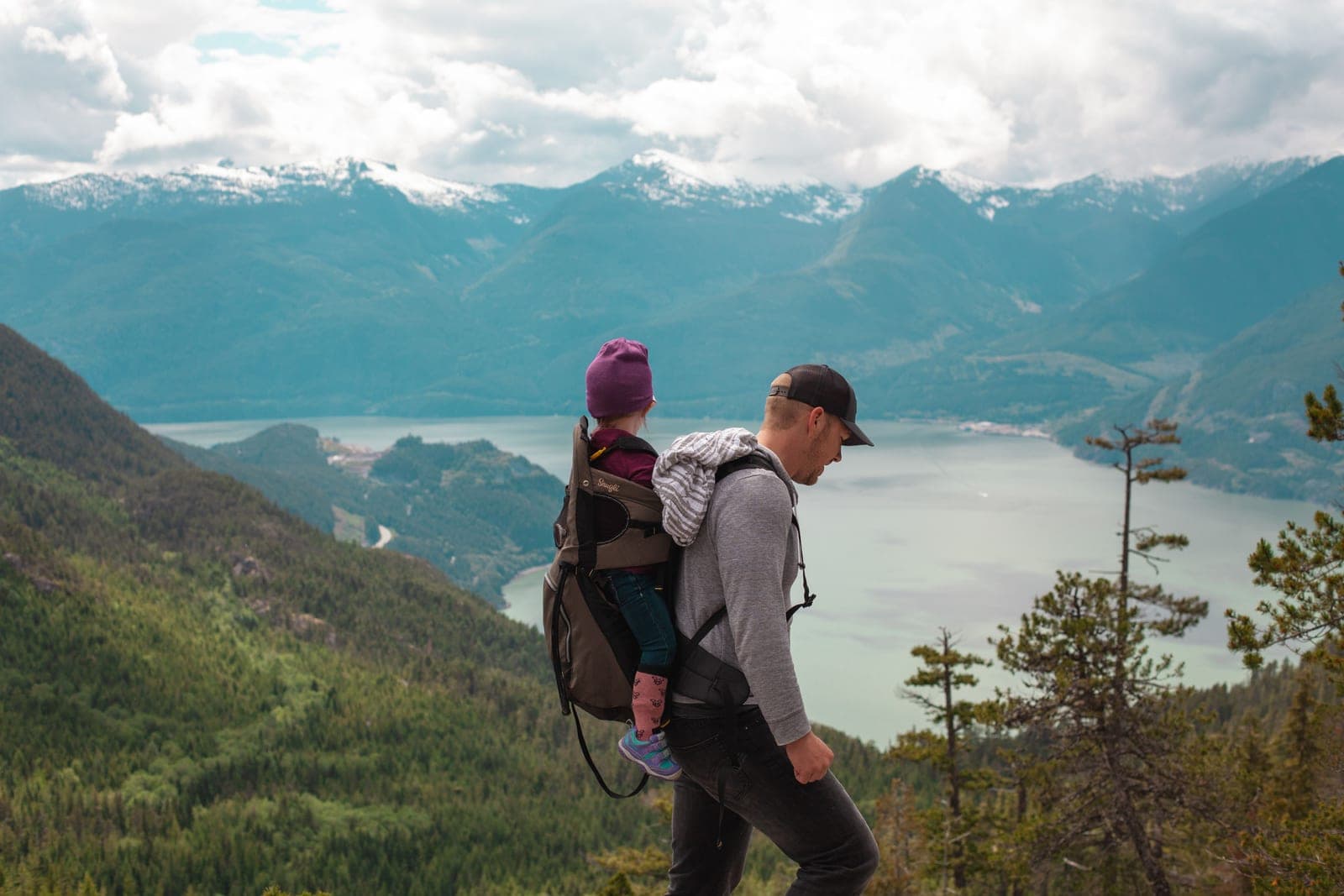
A framed pack buys you distance and gear space. It costs you 5 to 8 lb before the child gets in, which is the trade to think about honestly.
By Ryder M. · Published September 27, 2026 · Last reviewed
Disclosure: Wrap & Wander earns a commission on qualifying purchases made through links on this page, at no cost to you. It does not change which products we recommend or the order we rank them in — see how we pick and our full disclosure.
Quick picks
Ranked on the specs that decide it for a traveling parent — carried weight, packed size and fit. Tap a row to jump to the full write-up.
| # | Product | Best for | Score | Price |
|---|---|---|---|---|
| 1 |  Osprey Poco Child Carrier4.72 lb of pack for a 48.5 lb total capacity and 22 L of storage — the best weight-to-capacity ratio of the framed carriers we compared. | Day hikes where you carry the child, the water and the snacks | 8.9 | |
| 2 | Deuter Kid ComfortA 53 lb total capacity and a hip belt that pivots with your stride — more carrier, and more carrier weight to go with it. | A heavier child and longer days | 8.4 | |
| 3 |  Ergobaby Omni BreezeFor walks under about two hours with a child under 30 lb, a mesh soft carrier does the job and packs into a daypack afterwards. | Short trails, or a hike at the end of a flight | 8.1 | |
| 4 |  Baby Tula Explore1.7 lb in a daypack for the stretch where a toddler gives up — the sensible choice when most of the walking is theirs. | Carrying a carrier you mostly will not use | 7.9 |
A framed child carrier is a different category from a soft carrier, not a better version of one. It buys you load transfer to your hips, an air gap between you and the child, and enough storage to leave the daypack at home. It costs you between five and eight pounds before the child is in it, and it is unusable anywhere that is not a trail. Both halves of that trade are real. The wider category is in our carriers hub, and for terrain where a stroller stops working, see travel strollers and car seats.
The comparison that decides it
| Carrier | Pack weight | Total capacity | Gear storage |
|---|---|---|---|
| Osprey Poco | 4.72 lb | 48.5 lb (child to 40 lb) | 22 L |
| Deuter Kid Comfort | 7 lb 12 oz | 53 lb | 14 L |
| Ergobaby Omni Breeze (soft) | Not published | Child to 45 lb | None |
| Baby Tula Explore (soft) | 1.7 lb | Child to 45 lb | None |
Framed carrier figures from the Treeline Review measurements cited in Sources, read 2026-09-27; soft carrier figures from each brand's own page.
The Osprey is three pounds lighter than the Deuter and carries eight more liters. The Deuter takes five more pounds of total load and has a hip belt that pivots with your stride, which matters over a long day. If your child is under 30 lb and your hikes are day-length, the Osprey is the better pack. If the child is heavier or the days are longer, the Deuter earns its weight.
When a soft carrier is the right answer
Under about two hours, with a child under 30 lb, on a trail you could walk in trainers: a mesh soft carrier is fine and you will not wish you had a frame. Past that — or with any real elevation, or any need to carry water for three people — the frame is doing something a soft carrier cannot. Be honest about which trip you are actually taking. A framed carrier bought for one annual hike spends the rest of the year being the largest thing in a closet.
What we’d skip
Framed carriers with no published total capacity. The number that matters is total load, not just child weight, because your gear goes in the same pack. If a listing does not state it, you cannot plan around it.
A framed carrier as your travel carrier. It will not fit under a seat and it is miserable through security. Every family we see doing both ends up owning a soft carrier too.
Any framed carrier for a baby who cannot sit unsupported. Manufacturers set that minimum on developmental capability for a reason. A soft carrier is the only correct option before it.
Every pick in full
Osprey Poco Child Carrier
4.72 lb of pack for a 48.5 lb total capacity and 22 L of storage — the best weight-to-capacity ratio of the framed carriers we compared.
Best for: Day hikes where you carry the child, the water and the snacks
| Pack weight | 4.72 lb |
|---|---|
| Total capacity | 48.5 lb (child up to 40 lb) |
| Gear storage | 22 L |
Specs from Treeline Review — Osprey Poco child carrier review, read 2026-09-27. Manufacturers revise specs without notice — check the listing before you buy.
Good at
- 4.72 lb pack weight, light for a framed carrier
- 48.5 lb total capacity with a child up to 40 lb
- 22 L of gear storage, which genuinely replaces a separate daypack
- Framed suspension puts the load on your hips rather than your shoulders
Bad at
It cannot go in a terminal. The frame does not fit under an airline seat, it is awkward through a security line, and it will not compress into a bag — so a trip that involves both flying and hiking needs a second, soft carrier.
How it scores (out of 10)
Overall 8.9 — a research score against published specs, not a test result. See how we pick.
IllustrativeDeuter Kid Comfort
A 53 lb total capacity and a hip belt that pivots with your stride — more carrier, and more carrier weight to go with it.
Best for: A heavier child and longer days
| Pack weight | 7 lb 12 oz |
|---|---|
| Total capacity | 53 lb |
| Gear storage | 14 L |
| Suspension | Vari-Flex hip belt that moves with the wearer |
Specs from Treeline Review — best baby and toddler hiking carriers, read 2026-09-27. Manufacturers revise specs without notice — check the listing before you buy.
Good at
- 53 lb total capacity, the highest here
- Vari-Flex hip belt that moves with the wearer's stride
- Built-in sunshade on the models that include it
- Suspension designed for longer days under load
Bad at
7 lb 12 oz of pack weight before the child, and only 14 L of storage — so you carry three pounds more than the Osprey and get eight liters less gear space.
How it scores (out of 10)
Overall 8.4 — a research score against published specs, not a test result. See how we pick.
IllustrativeErgobaby Omni Breeze
For walks under about two hours with a child under 30 lb, a mesh soft carrier does the job and packs into a daypack afterwards.
Best for: Short trails, or a hike at the end of a flight
| Fits | 7-45 lb (3.2-20 kg), no infant insert required |
|---|---|
| Fabric | SoftFlex mesh throughout |
| Positions | 4 - front inward, front outward, hip, back |
| Seat | bucket seat adjusts to hold an M-shape hip position at every size |
Specs from Ergobaby Omni Breeze specifications, read 2026-09-27. Manufacturers revise specs without notice — check the listing before you buy.
Good at
- 7-45 lb, so it covers a toddler as well as a baby
- Back carry position works on a trail
- Mesh throughout, which matters as much on a climb as in an airport
- Packs down into a daypack when the child walks
Bad at
No frame means no air gap and no load transfer — the child's weight sits directly against your back, and there is nowhere to put water or a jacket. Past two hours you will feel every difference from a framed pack.
How it scores (out of 10)
Overall 8.1 — a research score against published specs, not a test result. See how we pick.
IllustrativeBaby Tula Explore
1.7 lb in a daypack for the stretch where a toddler gives up — the sensible choice when most of the walking is theirs.
Best for: Carrying a carrier you mostly will not use
| Fits | 7-45 lb, no infant insert |
|---|---|
| Carrier weight | 1.7 lb |
| Hip belt | 5 in tall, 27 in wide with roughly 30 in of extra webbing (about 57 in total) |
| Panel | 3 width settings from 5 to 15 in; 2 height settings |
| Wearer sizes | XS-4X |
Specs from Baby Tula — everything you need to know about Tula Explore, read 2026-09-27. Manufacturers revise specs without notice — check the listing before you buy.
Good at
- 1.7 lb published carrier weight
- Panel widens to 15 in for longer legs
- Back carry supported
- Folds small enough to be an afterthought in a pack
Bad at
No frame, no storage, no load transfer. This is insurance against a tired toddler, not a hiking carrier.
How it scores (out of 10)
Overall 7.9 — a research score against published specs, not a test result. See how we pick.
IllustrativeQuestions parents actually ask
At what age can a baby go in a framed hiking carrier?
Framed carriers require a child who can sit unsupported with good head and neck control, which is typically around six months but varies. Check the specific carrier's stated minimum — manufacturers set it on developmental capability, not age alone. Before that point a soft carrier is the only option.
How much does a hiking carrier weigh?
Published pack weights vary more than you would expect: 4.72 lb for the Osprey Poco against 7 lb 12 oz for the Deuter Kid Comfort. That three-pound gap is most of a toddler's lunch and a liter of water, so it is worth comparing before you buy.
Can I take a framed carrier on a plane?
You can check it, and some airlines will gate-check it as child equipment — Southwest, for example, publishes a free allowance of one stroller and one car seat per ticketed customer, and a framed carrier is not named in that. Assume it is regular baggage unless the airline says otherwise, and do not count on carrying it into the cabin.
Do I need the sunshade?
On any exposed trail, yes — a child in a framed carrier sits higher than you and cannot move out of the sun. Some models include one, others sell it separately. A hat alone does not cover the situation where the child falls asleep and their head tips sideways.
Sources
- Treeline Review — Osprey Poco child carrier review — read 2026-09-27
- Treeline Review — best baby and toddler hiking carriers — read 2026-09-27
- Ergobaby — Omni Breeze FAQs and specifications — read 2026-09-27
- Baby Tula — everything you need to know about Tula Explore — read 2026-09-27
- Southwest Airlines — stroller and child items policy — read 2026-09-27
Every figure on this page traces to one of the sources above. Airline policies and manufacturer specs change without notice — check the primary source before you rely on a number.
Read next
- Best Toddler Carriers for Travel
Carriers and hip seats for 25-45 lb children, ranked on published weight ceiling and how much bulk you carry when the child walks.
- Best Baby Carriers for Travel
Eight carriers ranked on carrier weight, waistbelt range and packed bulk — the three specs that decide an airport day.
- Travel Strollers & Car Seats
Folded dimensions, gate-check survival and what actually fits in an overhead bin.
- Baby Carrier Weight Limits by Age
Every published weight range by carrier type in one table, and why a tested limit is not a comfort limit.
- Best Baby Carriers for Hot Weather
Mesh carriers, thin wraps and hip seats compared on published fabric construction — the spec that decides a hot-climate trip.
More in Baby Carriers & Wraps, or start from the front page.