Baby Carrier vs Hiking Backpack
The question is not which is better. It is how many hours a day the child is in it, and whether the thing has to get on a plane.
By Ryder M. · Published October 17, 2026 · Last reviewed
Disclosure: Wrap & Wander earns a commission on qualifying purchases made through links on this page, at no cost to you. It does not change which products we recommend or the order we rank them in — see how we pick and our full disclosure.
Quick picks
Ranked on the specs that decide it for a traveling parent — carried weight, packed size and fit. Tap a row to jump to the full write-up.
| # | Product | Best for | Score | Price |
|---|---|---|---|---|
| 1 | 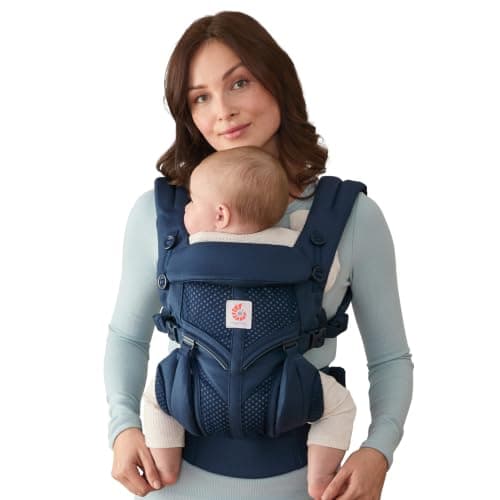 Ergobaby Omni Classic (formerly Omni 360)7-45 lb with no infant insert, a waistbelt adjusting 26-52 in, straps adjusting 28-46 in and four positions including a back carry — a carrier that packs into hand luggage and covers newborn to preschool. | Anything under about two hours, and everything that involves an airport | 9.0 | $179.00 · View on Amazon #ad we may earn a commission · price as of November 12, 2026 |
| 2 | 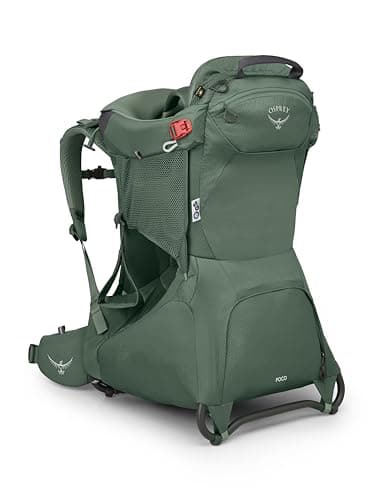 Osprey Poco Child Carrier4.72 lb of pack, 48.5 lb total capacity with a child up to 40 lb, and 22 L of gear storage — the lightest framed carrier in our registry and the only one we would willingly check. | Hiking days that begin with a flight | 9.2 | $400.00 · View on Amazon #ad we may earn a commission · price as of November 12, 2026 |
| 3 | 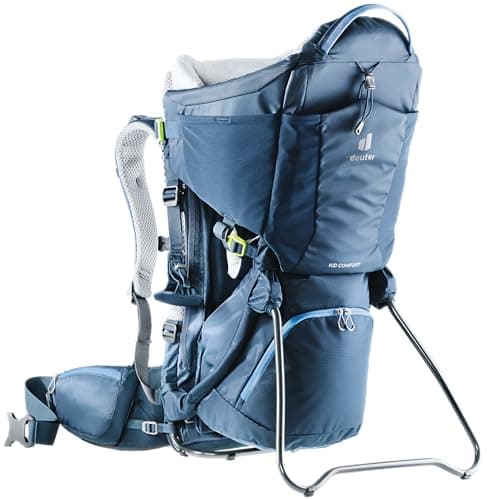 Deuter Kid Comfort7 lb 12 oz with a 53 lb total capacity, 14 L of storage and a Vari-Flex hip belt published as moving with the wearer. | A heavy child and six hours a day on foot | 8.7 | $309.95 · View on Amazon #ad we may earn a commission · price as of November 12, 2026 |
The short answer
Under two hours, or anywhere near an airport: a soft carrier. It is a couple of pounds, packs flat into hand luggage, and covers 7-45 lb. Over two hours on uneven ground: a framed child carrier. It costs you 4.72 lb (Osprey Poco) to 7 lb 12 oz (Deuter Kid Comfort) and has to be checked, but it moves the load onto your hips and gives you 14-22 L of storage.
The two things are not competitors
People frame this as a product comparison, and it is really a question about duration. A soft carrier and a framed carrier are solving different mechanical problems:
- A soft carrier holds a child against your torso. There is no structure between the child and you, so the weight goes directly into your shoulders, your lumbar spine and your hips. That is efficient and compact, and it stops being comfortable as weight times time goes up.
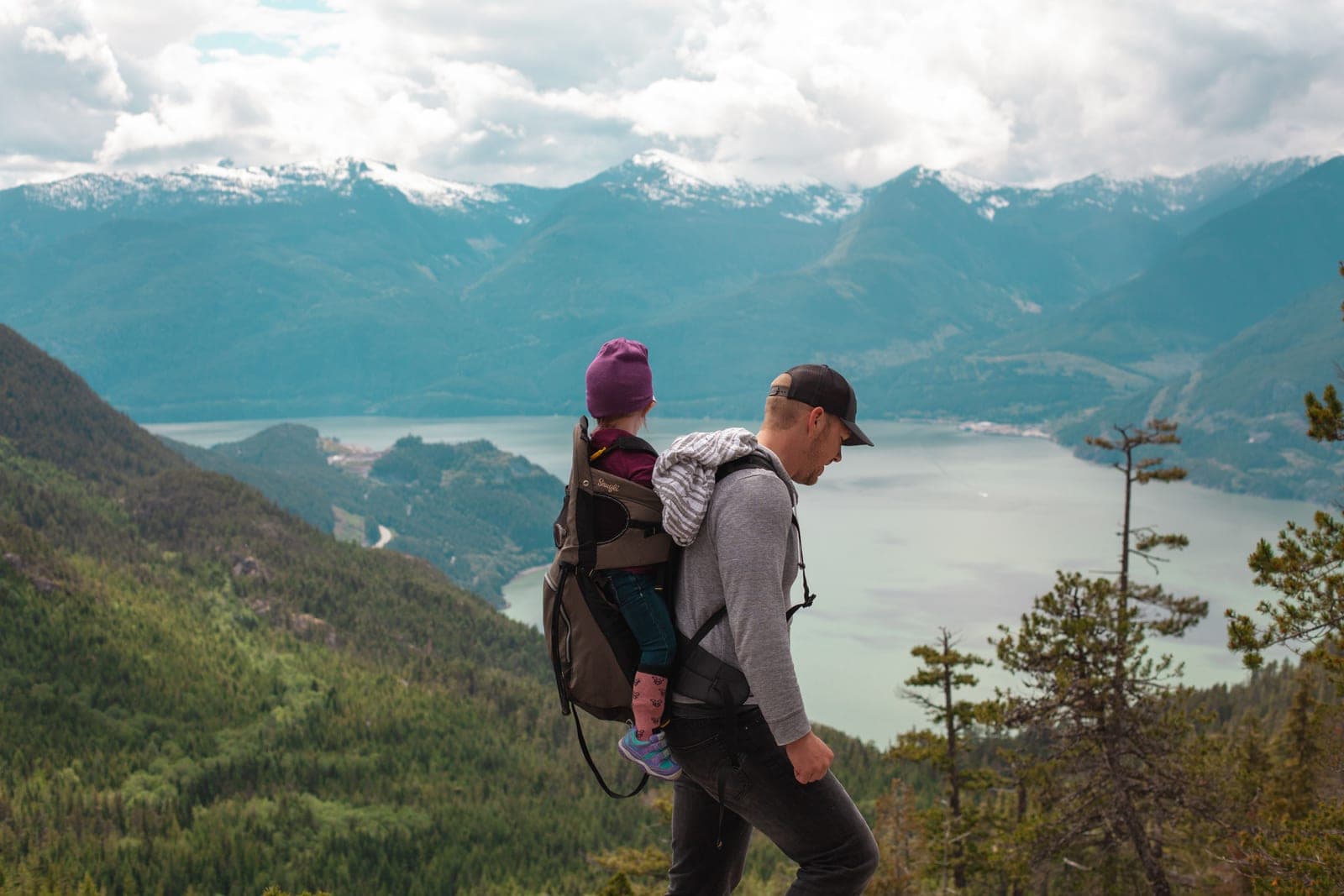
- A framed carrier is a backpacking pack with a seat in it. The frame holds the child away from your back, and a load-bearing hip belt transfers most of the weight onto your pelvis. That is why you can walk all day under one, and why it weighs three to six pounds before the child gets in.
The published numbers
| Ergobaby Omni Classic (soft) | Osprey Poco (framed) | Deuter Kid Comfort (framed) | |
|---|---|---|---|
| Empty weight | Not published | 4.72 lb | 7 lb 12 oz |
| Child range | 7-45 lb (3.2-20 kg) | Up to 40 lb (48.5 lb total) | 53 lb total capacity |
| Works from newborn | Yes, no insert | No | No |
| Gear storage | None | 22 L | 14 L |
| Front carry | Yes | No | No |
| Packs into hand luggage | Yes | No | No |
| Load path | Shoulders and hips directly | Frame to hip belt | Frame to Vari-Flex hip belt |
Ergobaby figures from Ergobaby — Omni 360 FAQs and specifications, read 2026-09-27. Osprey from Treeline Review — Osprey Poco child carrier review, read 2026-09-27. Deuter from Treeline Review — best baby and toddler hiking carriers, read 2026-09-27. "Total capacity" on a framed pack is pack plus child plus gear.
The three tests that actually decide it
1. The duration test. How many consecutive hours will the child be in it? Under two, soft. Over two, framed. This single question resolves the majority of cases, and it is the one people skip in favour of reading about suspension systems.
2. The terrain test. On pavement, a soft carrier stays comfortable longer, because your gait is even and you are not constantly rebalancing. On rock, roots and gradient, the load shifts with every step and a frame that holds the child in a fixed position relative to your hips is worth real weight.
3. The luggage test. This is the one this site cares about most. A framed carrier is a checked item — neither brand publishes a cabin-baggage claim, and the frame will not fit an overhead bin. So bringing one costs you 4.72 to 7.75 pounds of allowance plus a piece of luggage to protect it. A soft carrier goes in your personal item and weighs about as much as a paperback.
What a framed carrier cannot do
Newborns. A framed pack requires a child who can sit unsupported with steady head and neck control. The soft carriers in our registry start at 7 or 8 lb; the framed ones start at a developmental milestone commonly reached around six months. If your baby is under that, the comparison is moot — see hiking carriers for 6 month olds.
Front carries. A frame only does back carries. For a baby who needs to be watched, fed or settled, that is a real limitation.
Airports. You cannot wear a framed carrier through a security queue in any practical sense, and you cannot wear one at a gate. Our airport security page covers what you can keep on.
What a soft carrier cannot do
Carry gear. Zero liters. You still need a bag, and the bag goes on the front or on a second adult. The Poco’s 22 L genuinely removes a piece of luggage from the day.
Stay comfortable at weight times time. There is no padding solution to 32 lb on your shoulders for four hours. This is physics, not product quality.
Keep the child off your back heat. A framed carrier holds the child away from your body, which in a hot climate is a genuine advantage for both of you — one of the few places the heavy option wins on comfort for a short walk too. If heat is the problem, our hot-weather roundup covers the mesh soft carriers.
Positioning applies to both
Whichever you buy, the seat has to support the thighs so the hips sit in a spread-squat rather than the legs hanging from the crotch — the International Hip Dysplasia Institute’s guidance is the same for soft and framed carriers (hipdysplasia.org, read 2026-09-27). On a soft carrier that is the panel width setting; on a framed pack it is the seat height adjustment, which is also what stops a small child slumping.
And if the real answer is a stroller
Worth saying out loud: for a lot of travel the thing that beats both of these is a travel stroller the child can nap in while you carry nothing at all. The trade — folded size, gate checks, stairs and cobbles — is worked through at baby carrier vs stroller for travel. The full framed-carrier ranking is at best hiking baby carriers, and the two leading packs go head to head at Poco vs Kid Comfort.
Every pick in full
Ergobaby Omni Classic (formerly Omni 360)
7-45 lb with no infant insert, a waistbelt adjusting 26-52 in, straps adjusting 28-46 in and four positions including a back carry — a carrier that packs into hand luggage and covers newborn to preschool.
Best for: Anything under about two hours, and everything that involves an airport
| Fits | 7-45 lb (3.2-20 kg), newborn to toddler, no infant insert |
|---|---|
| Waistbelt | adjusts 26-52 in |
| Shoulder straps | adjust 28-46 in |
| Positions | 4 - front inward, front outward, hip, back |
Specs from Ergobaby Omni 360 specifications, read 2026-09-27. Manufacturers revise specs without notice — check the listing before you buy.
Good at
- Covers 7-45 lb on one purchase, which is the whole span a framed pack never reaches at the bottom
- Waistbelt 26-52 in and straps 28-46 in, so two differently sized parents can share it
- Four positions including a back carry, which is what you need once the child is heavy
- Packs flat - no frame, no bulk, no checked bag
Bad at
No frame means the load sits directly on your shoulders and hips, and no gear storage means you still need a bag. Past about two hours on uneven ground with a 30 lb child, this is the wrong tool and your back will say so.
How it scores (out of 10)
Overall 9.0 — a research score against published specs, not a test result. See how we pick.
#ad we may earn a commission · price as of November 12, 2026
Osprey Poco Child Carrier
4.72 lb of pack, 48.5 lb total capacity with a child up to 40 lb, and 22 L of gear storage — the lightest framed carrier in our registry and the only one we would willingly check.
Best for: Hiking days that begin with a flight
| Pack weight | 4.72 lb |
|---|---|
| Total capacity | 48.5 lb (child up to 40 lb) |
| Gear storage | 22 L |
Specs from Treeline Review — Osprey Poco child carrier review, read 2026-09-27. Manufacturers revise specs without notice — check the listing before you buy.
Good at
- 22 L of gear storage, which means the carrier replaces your daypack rather than adding to it
- 4.72 lb, roughly three pounds lighter than the Deuter equivalent
- A frame puts the load on your hips, which is the mechanical reason this exists
- Child up to 40 lb published, well past where a soft carrier stays comfortable
Bad at
It is not for infants - a framed pack is for a child who can sit unsupported and hold their head steadily - and it cannot be worn through airport security or at a gate. It is also a checked item: no cabin-baggage claim is published for it.
How it scores (out of 10)
Overall 9.2 — a research score against published specs, not a test result. See how we pick.
#ad we may earn a commission · price as of November 12, 2026
Deuter Kid Comfort
7 lb 12 oz with a 53 lb total capacity, 14 L of storage and a Vari-Flex hip belt published as moving with the wearer.
Best for: A heavy child and six hours a day on foot
| Pack weight | 7 lb 12 oz |
|---|---|
| Total capacity | 53 lb |
| Gear storage | 14 L |
| Suspension | Vari-Flex hip belt that moves with the wearer |
Specs from Treeline Review — best baby and toddler hiking carriers, read 2026-09-27. Manufacturers revise specs without notice — check the listing before you buy.
Good at
- 53 lb total capacity, the highest in our registry
- A hip belt engineered to track your stride rather than fight it
- Designed around hours of load carriage, not around packed weight
Bad at
7 lb 12 oz empty and only 14 L of storage - heavier than the Poco and less useful as a bag. For anyone flying to the walking rather than driving to it, those are both the wrong direction.
How it scores (out of 10)
Overall 8.7 — a research score against published specs, not a test result. See how we pick.
#ad we may earn a commission · price as of November 12, 2026
Questions parents actually ask
What is the difference between a baby carrier and a hiking backpack carrier?
A soft carrier is fabric: it holds the child against your body and the load goes straight onto your shoulders and hips. A framed child carrier has an internal frame and a load-bearing hip belt, like a backpacking pack with a seat in it, plus 14-22 L of gear storage. The frame is the difference, and it costs three to six pounds of weight.
At what age can a baby go in a hiking backpack?
When they can sit unsupported with steady head and neck control - commonly around six months, but it is a developmental milestone, not a birthday. Before that, a soft carrier is the only correct option. Our hiking carriers for 6 month olds page covers the transition.
Do I need a framed carrier or is a soft one enough?
Use the duration test. Under about two hours, on reasonable ground, a soft carrier is enough and far more convenient. Over that, or on sustained uneven terrain, the frame earns its weight. Most families who travel rather than hike never need the frame.
Can you take a framed child carrier on a plane?
Not in the cabin. Neither Osprey nor Deuter publishes a carry-on claim for these packs, and the rigid frame will not fit an overhead bin. Plan to check it - which is why the 4.72 lb versus 7 lb 12 oz difference matters so much on a trip.
Can a framed carrier replace a diaper bag?
The Osprey Poco's 22 L can, for a day out. The Deuter's 14 L is tighter. Neither has a changing pad or insulated bottle pockets, so for air travel you still want a proper bag as your personal item.
Sources
- Ergobaby — Omni 360 FAQs and specifications — read 2026-09-27
- Treeline Review — Osprey Poco child carrier review — read 2026-09-27
- Treeline Review — best baby and toddler hiking carriers — read 2026-09-27
- International Hip Dysplasia Institute — baby carriers and other equipment — read 2026-09-27
Every figure on this page traces to one of the sources above. Airline policies and manufacturer specs change without notice — check the primary source before you rely on a number.
Read next
- Best Hiking Baby Carriers
Framed child carriers compared on pack weight, total capacity and storage — and when a soft carrier is the better trail choice.
- Osprey Poco vs Deuter Kid Comfort
4.72 lb and 22 L against 7 lb 12 oz and a 53 lb total capacity — the published figures, and which one survives a baggage allowance.
- Hiking Carriers for a 6 Month Old
What decides whether a six-month-old can go in a framed hiking pack, and the soft-carrier answer if they cannot yet.
- Best Carriers for 3 Year Olds
The carriers with published range left at three years old - 45 lb soft-structured and framed packs to 48.5 and 53 lb total.
- Baby Carrier vs Stroller for Travel
A stroller carries your bags but gets gate-checked; a carrier goes everywhere. How to decide, with the airline rules.
More in Baby Carriers & Wraps, or start from the front page.