Hiking Carriers for a 6 Month Old
Every framed pack publishes what it can hold. Neither of the two in our registry publishes when a child is old enough to sit in it — and that is the only question that matters at six months.
By Ryder M. · Published October 7, 2026 · Last reviewed
Disclosure: Wrap & Wander earns a commission on qualifying purchases made through links on this page, at no cost to you. It does not change which products we recommend or the order we rank them in — see how we pick and our full disclosure.
Quick picks
Ranked on the specs that decide it for a traveling parent — carried weight, packed size and fit. Tap a row to jump to the full write-up.
| # | Product | Best for | Score | Price |
|---|---|---|---|---|
| 1 |  Ergobaby Omni 3607-45 lb with four positions including a back carry and no infant insert — a soft carrier that covers the whole window before a framed pack, and most of the window after it. | Trail walking with a baby who is not ready for a framed seat | 9.0 | |
| 2 |  Osprey Poco Child Carrier4.72 lb of pack carrying up to 48.5 lb total with 22 L of gear space — the best weight-to-capacity ratio of any framed carrier we compared. | Full days on trail once the child can sit unaided with good head and trunk control | 8.8 | |
| 3 | Deuter Kid Comfort53 lb total capacity on a Vari-Flex hip belt that moves with the wearer — the highest ceiling here, at 7 lb 12 oz of pack before anyone gets in. | A heavier child and a wearer who wants the suspension to move with them | 8.4 |
The short answer
At six months, carry in a soft structured carrier with a published back carry — the Ergobaby Omni 360, 7-45 lb, four positions. Neither framed pack in our registry publishes a minimum age or minimum child size on the sources we read, so we will not tell you a six-month-old is cleared for one. The threshold framed-carrier makers work to is whether the child can sit upright unaided with good head and trunk control; that is a question for the brand and your pediatrician, not for a spec table.
The spec nobody publishes
Framed child carriers publish capacity enthusiastically. Osprey’s Poco is 4.72 lb of pack with a 48.5 lb total capacity and 22 L of gear space; Deuter’s Kid Comfort is 7 lb 12 oz with a 53 lb total capacity and 14 L (Treeline Review, read 2026-09-27). Those are good, specific, useful numbers.
None of them is the number you came for. “Up to 40 lb” tells you when a child is too big. It says nothing at all about when a child is big enough, and a six-month-old is nowhere near either end of the published range — they are below the bottom of a range that has no published bottom.
We read the sources we cite and they do not publish a minimum age or a minimum child size for either pack. So this page does not print one. What it does instead is explain the gate that framed-carrier manufacturers generally describe, and give you the carrier that works today if the answer for your child is not yet.
What the gate actually is
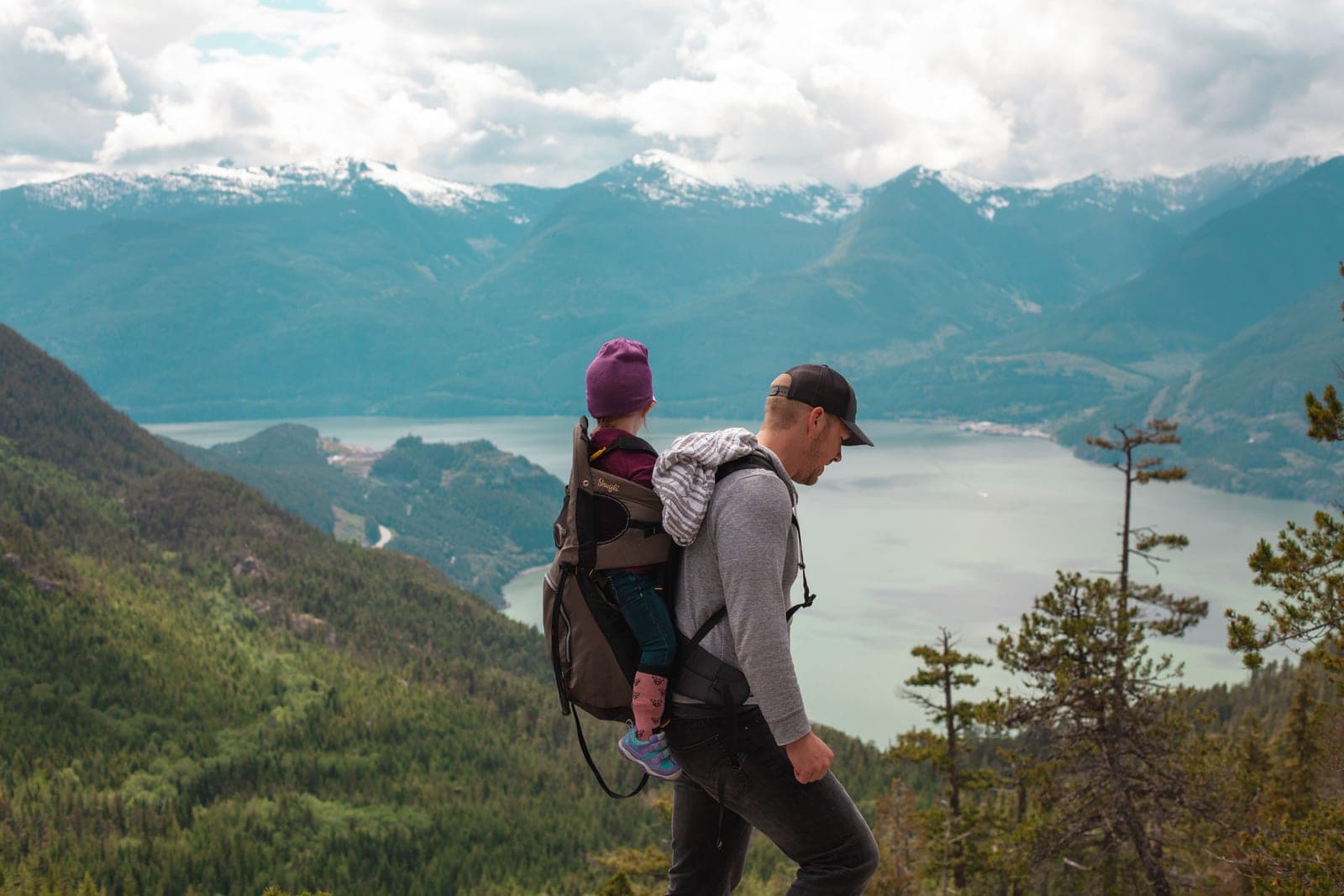
A framed carrier seats a child upright in a rigid cockpit, high on your back, over ground that moves. That arrangement assumes the child can hold their own head and torso steady and can sit without being propped. Until they can, the seat is doing a job the child’s own muscles are supposed to do, and the carrier is the wrong tool rather than a dangerous one.
You see the same threshold written down elsewhere in travel gear when a manufacturer needs a child to sit unaided. AmSafe publishes it explicitly for the CARES aviation harness: 22-44 lb, 40 in or less, able to sit upright unaided (amsafe.com, read 2026-09-27). That is a different product with a different purpose, and we are not transferring its numbers to a backpack. It is quoted here only to show that “sits unaided” is a real, published engineering threshold rather than something we invented for this page.
So: read your pack’s own manual, ask the brand about your specific model, and raise it at a six-month check-up if you are unsure. That is a short, boring answer and it is the correct one.
What to look for if you are buying now anyway
Plenty of people buy the framed pack at six months and start using it at nine or twelve. If that is the plan, buy on the numbers that will matter then.
| Osprey Poco | Deuter Kid Comfort | Ergobaby Omni 360 | |
|---|---|---|---|
| Pack weight | 4.72 lb | 7 lb 12 oz | Not published |
| Capacity | 48.5 lb total; child up to 40 lb | 53 lb total | 7-45 lb child |
| Gear storage | 22 L | 14 L | None |
| Suspension | Frame and hipbelt | Vari-Flex hip belt that moves with the wearer | Padded waistbelt, 26-52 in |
| Minimum age or size | Not published on the source we read | Not published on the source we read | 7 lb, no insert |
| Packs into a bag | No | No | Yes |
Osprey and Deuter figures from Treeline Review, read 2026-09-27; Ergobaby figures from ergobaby.com, read 2026-09-27. "Not published" means absent from the source we read — we do not estimate a minimum age for a child carrier under any circumstances.
Three pounds of pack weight is the headline. The Osprey carries 22 L of gear at 4.72 lb; the Deuter carries 14 L at 7 lb 12 oz but tops out 4.5 lb higher and has the more sophisticated hipbelt. Our framed hiking carrier roundup ranks them properly, and the Osprey Poco review goes through the winner in detail.
The six-month trail setup that works
A soft carrier with a back carry, a published fit range so both adults can wear it, and a daypack on the other person. The Ergobaby Omni 360 publishes 7-45 lb, four positions including back, a waistbelt adjusting 26-52 in and shoulder straps adjusting 28-46 in — which in practice means you can hand it over at a trailhead and the other adult can have it fitted before you have finished the water bottles.
The honest limits: no shade, no ventilation gap, no gear space, and the baby’s weight sits closer to your spine than a frame would put it. Under a couple of miles none of that is a problem. Over six miles, all of it is, which is the reason framed packs exist and the reason this page recommends one for later rather than instead.
Carry shade separately, and plan shorter than you would without a baby. A trail you have to turn around on at the halfway point is a good hike; a trail you finish with an unhappy six-month-old is not.
When to revisit this
Two things change the answer. The first is the child sitting steadily and unaided, which is the gate above. The second is your own comfort: the point at which a soft carrier stops being pleasant over distance arrives well before its 45 lb ceiling, and that gap between tested and comfortable is the whole subject of baby carrier weight limits by age. When both have happened, buy the Poco. Our carriers at one year page covers the stage in between.
Every pick in full
Ergobaby Omni 360
7-45 lb with four positions including a back carry and no infant insert — a soft carrier that covers the whole window before a framed pack, and most of the window after it.
Best for: Trail walking with a baby who is not ready for a framed seat
| Fits | 7-45 lb (3.2-20 kg), newborn to toddler, no infant insert |
|---|---|
| Waistbelt | adjusts 26-52 in |
| Shoulder straps | adjust 28-46 in |
| Positions | 4 - front inward, front outward, hip, back |
Specs from Ergobaby Omni 360 specifications, read 2026-09-27. Manufacturers revise specs without notice — check the listing before you buy.
Good at
- Published 7-45 lb, so it already covers a six-month-old with years to spare
- Back carry included, which is the position you want on a trail
- Waistbelt adjusts 26-52 in and shoulder straps 28-46 in — published, so both adults can use it
- Nothing rigid: it packs into a daypack when the baby wants to be held in front instead
Bad at
No frame means no ventilation gap between you and the baby, no gear capacity, and no built-in sun shade. Over 5 or 6 miles a framed pack is genuinely more comfortable for both of you, and this is not pretending otherwise.
How it scores (out of 10)
Overall 9.0 — a research score against published specs, not a test result. See how we pick.
IllustrativeOsprey Poco Child Carrier
4.72 lb of pack carrying up to 48.5 lb total with 22 L of gear space — the best weight-to-capacity ratio of any framed carrier we compared.
Best for: Full days on trail once the child can sit unaided with good head and trunk control
| Pack weight | 4.72 lb |
|---|---|
| Total capacity | 48.5 lb (child up to 40 lb) |
| Gear storage | 22 L |
Specs from Treeline Review — Osprey Poco child carrier review, read 2026-09-27. Manufacturers revise specs without notice — check the listing before you buy.
Good at
- 4.72 lb — the lighter of the two framed packs by about 3 lb
- 48.5 lb total capacity, with the child rated up to 40 lb
- 22 L of gear storage, which is a day's water, food and layers for two people
- A real hipbelt and frame, so almost nothing lands on your shoulders
Bad at
Our source for these figures publishes pack weight and capacity and does not publish a minimum age or a minimum child size, so we cannot tell you it is cleared for a six-month-old. Ask Osprey about your specific pack and your specific child before you buy it for that purpose.
How it scores (out of 10)
Overall 8.8 — a research score against published specs, not a test result. See how we pick.
IllustrativeDeuter Kid Comfort
53 lb total capacity on a Vari-Flex hip belt that moves with the wearer — the highest ceiling here, at 7 lb 12 oz of pack before anyone gets in.
Best for: A heavier child and a wearer who wants the suspension to move with them
| Pack weight | 7 lb 12 oz |
|---|---|
| Total capacity | 53 lb |
| Gear storage | 14 L |
| Suspension | Vari-Flex hip belt that moves with the wearer |
Specs from Treeline Review — best baby and toddler hiking carriers, read 2026-09-27. Manufacturers revise specs without notice — check the listing before you buy.
Good at
- 53 lb total capacity — the highest of the two framed packs
- Vari-Flex hip belt that moves with the wearer, which matters on uneven ground
- 14 L of gear storage
Bad at
7 lb 12 oz is 3 lb more pack than the Osprey before the child is in it, and 14 L is 8 L less gear space. Like the Osprey, our source does not publish a minimum age, so the six-month question is one for Deuter rather than for us.
How it scores (out of 10)
Overall 8.4 — a research score against published specs, not a test result. See how we pick.
IllustrativeQuestions parents actually ask
Can a 6 month old go in a hiking backpack carrier?
That is a question for the brand, not for a roundup. Neither of the sources we read for the Osprey Poco or the Deuter Kid Comfort publishes a minimum age or minimum child size, so we will not state one. The threshold framed-carrier manufacturers generally work to is whether the child can sit upright unaided with good head and trunk control — check your pack's own manual, and ask the brand if it is not stated.
What should I use for hiking with a 6 month old instead?
A soft structured carrier with a published back-carry position. The Ergobaby Omni 360 publishes 7-45 lb and four positions including back, with a waistbelt that adjusts 26-52 in, so it fits a six-month-old now and still works at three years. It has no gear capacity and no shade, which is the trade.
How much does a framed child carrier weigh?
The Osprey Poco is 4.72 lb and the Deuter Kid Comfort is 7 lb 12 oz, as published by the sources we cite. That is pack weight before the child, the water and the gear, which is why a framed pack is a different kind of purchase from a soft carrier.
Is a framed carrier better than a soft carrier for hiking?
Over distance, yes: a frame and a hipbelt move almost all of the load to your hips, and 22 L or 14 L of gear space means you are not carrying a second bag. Under a couple of miles the soft carrier wins on weight, packability and the fact that you can take the baby out and hold them in front.
At what weight can a child use a framed hiking carrier?
The published figures are ceilings, not starting points: the Osprey Poco publishes 48.5 lb total with the child rated to 40 lb, and the Deuter Kid Comfort publishes 53 lb total. Neither source publishes a lower bound, so the starting point is the brand's fit guidance rather than a number we could print.
Sources
- Treeline Review — Osprey Poco child carrier review — read 2026-09-27
- Treeline Review — best baby and toddler hiking carriers — read 2026-09-27
- Ergobaby — Omni 360 FAQs and specifications — read 2026-09-27
- International Hip Dysplasia Institute — baby carriers and other equipment — read 2026-09-27
- AmSafe — CARES Child Aviation Restraint System — read 2026-09-27
Every figure on this page traces to one of the sources above. Airline policies and manufacturer specs change without notice — check the primary source before you rely on a number.
Read next
- Best Hiking Baby Carriers
Framed child carriers compared on pack weight, total capacity and storage — and when a soft carrier is the better trail choice.
- Osprey Poco Child Carrier Review
The Osprey Poco on published figures: 4.72 lb of pack, 48.5 lb total capacity, 22 L of storage — and the one place it cannot go.
- Best Baby Carriers for 1 Year Olds
Four carriers that publish a back-carry position, ranked for the one-year mark where front carrying starts to cost you.
- Hip-Healthy Baby Carriers
What the IHDI recommends, what its hip-healthy acknowledgment certifies, and which carriers carry it.
- Baby Carrier Weight Limits by Age
Every published weight range by carrier type in one table, and why a tested limit is not a comfort limit.
More in Baby Carriers & Wraps, or start from the front page.