Travel Crib Safety
Two published sources answer almost every question here: CPSC's play yard rule and the AAP's 2022 safe sleep recommendations. Informational, not medical advice.
By Ryder M. · Published September 27, 2026 · Last reviewed
The short answer
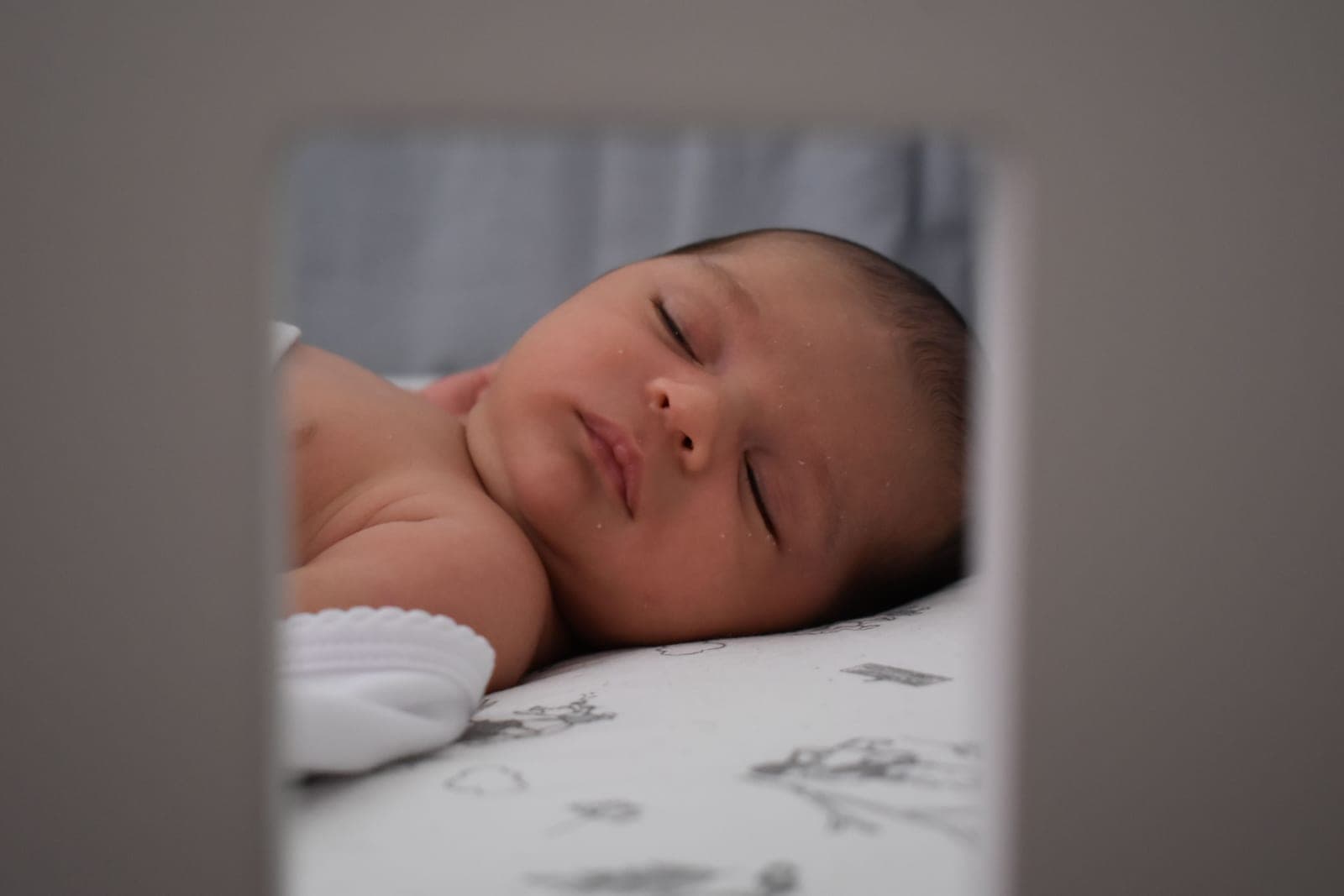
A travel crib is a safe place for a baby to sleep when it conforms to CPSC’s play yard standard, is fully and correctly assembled, and contains only the firm flat mattress it shipped with plus a fitted sheet. Nothing else goes in it — no topper, no pillow, no blanket, no bumper, no positioner. This page is informational and is not medical advice.
The standard, and what it covers
CPSC defines a play yard as a framed enclosure with a floor and mesh or fabric sides, intended for use in or around the home and for travel, providing sleeping and playing accommodation for a child who cannot climb out and is less than 35 in in height (cpsc.gov, read 2026-09-27).
The mandatory US standard is codified at 16 CFR part 1221 and incorporates ASTM F406 by reference. CPSC’s published guidance notes that the Commission voted that ASTM F406-22 did not improve the safety of play yards, and is retaining the rule incorporating ASTM F406-19 (cpsc.gov, read 2026-09-27). Two practical consequences: a crib sold new in the US is covered whether or not its listing says so, and a crib of unknown age cannot be assumed to meet the version currently in force.
The safe sleep rules that apply inside it
The crib being compliant is half of it. The other half is what goes in it, and the AAP’s 2022 recommendations are specific: infants should be placed on a firm, flat, non-inclined sleep surface covered by a fitted sheet with no other bedding or soft objects, and surfaces with inclines of more than 10 degrees are unsafe for infant sleep (publications.aap.org, read 2026-09-27). The AAP names a crib, bassinet or portable play yard with a firm flat mattress and a fitted sheet as appropriate, and advises against sleep in a seating device such as a swing or car seat except while riding in a car (healthychildren.org, read 2026-09-27).
The five things people add that they should not
| Addition | Why people add it | Why not to |
|---|---|---|
| Mattress topper | The travel crib mattress feels thin | Thin is the correct firmness; a topper also leaves gaps at the edges |
| Blanket | The room feels cold | Loose bedding is specifically excluded by the AAP guidance — use a wearable blanket instead |
| Crib bumpers | The child bumps the mesh sides | Soft objects in the sleep space; mesh sides are breathable by design |
| Sleep positioner or wedge | Reflux, or to keep a baby on their back | Introduces an incline and a soft object; the AAP limit is 10 degrees |
| A second sheet or towel under the baby | To catch spills | Anything not tightly fitted can move over the airway |
Based on the AAP's 2022 recommendations and CPSC's play yard guidance cited in Sources.
Checking a crib you did not buy
Hotel cribs, rentals, and the one that has lived in a relative’s garage for a decade. Five things to check, and it takes two minutes:
- The mesh. No holes, no tears, no loose or missing stitching where the mesh meets the rail.
- The floor. Fully locked down and flat, with no dip in the center and no gap between the mattress and the sides — you should not be able to fit two fingers in the gap.
- The mattress. The one that belongs to that crib, firm, flat, and not a folded quilt someone substituted.
- The rails. Fully latched. A partially latched rail is the classic play yard failure and it is not always obvious.
- Recalls. If it is old and you can read a model number, check CPSC’s recall list before using it.
If anything fails, do not use it. Our page on hotel cribs covers what to ask before you arrive, and our travel crib roundup covers what to bring if the answer is unsatisfying.
What certifications do and do not tell you
Two labels come up constantly in this category and they are not the same thing. Guava states both for the Lotus, which makes it a useful example: 16 CFR 1221 / ASTM F406 is the structural safety rule, and GREENGUARD Gold is a third-party certification for low chemical emissions (guavafamily.com, read 2026-09-27). A GREENGUARD label tells you nothing about whether a rail latches. Look for both claims and read them separately.
This page is informational and not medical advice. Safe sleep questions specific to your child — reflux, prematurity, a diagnosed condition — belong with their clinician, not with a gear site.
Questions parents actually ask
Are travel cribs safe for overnight sleep?
Yes, when the crib conforms to CPSC's play yard standard and is used with the firm flat mattress it shipped with, a fitted sheet, and nothing else in it. The AAP's 2022 recommendations name a crib, bassinet or portable play yard with a firm flat mattress and a fitted sheet as an appropriate sleep surface.
What standard do travel cribs have to meet?
In the US, CPSC codified the play yard regulation at 16 CFR part 1221, which incorporates ASTM F406 by reference. The Commission's current position retains the rule incorporating ASTM F406-19, having determined that ASTM F406-22 did not improve safety. A crib sold new in the US is subject to that rule.
Can I add a mattress topper to make it softer?
No. This is the single most common mistake and the AAP is explicit: infants should be placed on a firm, flat, non-inclined surface covered by a fitted sheet with no other bedding or soft objects. A travel crib mattress that feels thin to an adult is the correct firmness. A topper also creates a gap at the edges, which is its own hazard.
What about a used or borrowed travel crib?
Check the model against CPSC's recall list and confirm all the parts are present, the mesh is intact with no holes or loose stitching, and the floor locks fully. Play yard standards have been revised over the years, so a crib of unknown vintage cannot be assumed to meet the current rule.
Can a travel crib be used with an incline for reflux?
Not on your own initiative. The AAP states that sleep surfaces with inclines of more than 10 degrees are unsafe for infant sleep. If a clinician has advised something specific for your child, follow their guidance — that is a medical question, not a gear one, and this page is not medical advice.
Sources
- CPSC — play yards FAQ — read 2026-09-27
- CPSC — play yards business guidance (16 CFR part 1221, ASTM F406) — read 2026-09-27
- AAP — Sleep-Related Infant Deaths: Updated 2022 Recommendations — read 2026-09-27
- HealthyChildren.org (AAP) — a parent's guide to safe sleep — read 2026-09-27
- Guava Family — Lotus Travel Crib — read 2026-09-27
- Newton Baby — Compact Travel Crib & Play Yard — read 2026-09-27
Every figure on this page traces to one of the sources above. Airline policies and manufacturer specs change without notice — check the primary source before you rely on a number.
Read next
- Best Travel Cribs
Six travel cribs ranked on packed dimensions, weight and setup — the two specs that decide whether it flies with you.
- Travel Crib vs Pack and Play
Same safety standard, different purpose: packed size and weight against floor space and price per square inch.
- Do You Need a Travel Crib?
Four questions decide whether to buy one — and for a single hotel stay the answer is often no.
- Best Pack and Play for a Grandparents' House
A crib that stays at one house has different priorities: roomier sleep space, setup anyone can manage, and a bassinet stage.
- Best Toddler Travel Beds
Folding cots, inflatable beds with bumpers and blackout tents compared on published size and weight limits.
More in Travel Cribs & Pack-and-Plays, or start from the front page.