Osprey Poco vs Deuter Kid Comfort
Two framed child carriers that do the same job three pounds apart. On a trail the difference is comfort; in an airline weight allowance it is the whole decision.
By Ryder M. · Published October 17, 2026 · Last reviewed
Disclosure: Wrap & Wander earns a commission on qualifying purchases made through links on this page, at no cost to you. It does not change which products we recommend or the order we rank them in — see how we pick and our full disclosure.
Quick picks
Ranked on the specs that decide it for a traveling parent — carried weight, packed size and fit. Tap a row to jump to the full write-up.
| # | Product | Best for | Score | Price |
|---|---|---|---|---|
| 1 | 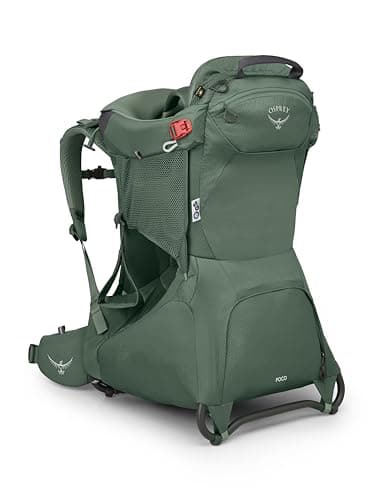 Osprey Poco Child Carrier4.72 lb of pack weight with 22 L of gear storage and a 48.5 lb total capacity, which is the lightest framed carrier here by a clear three pounds. | Hiking that starts at an airport rather than a trailhead | 9.2 | $400.00 · View on Amazon #ad we may earn a commission · price as of November 12, 2026 |
| 2 | 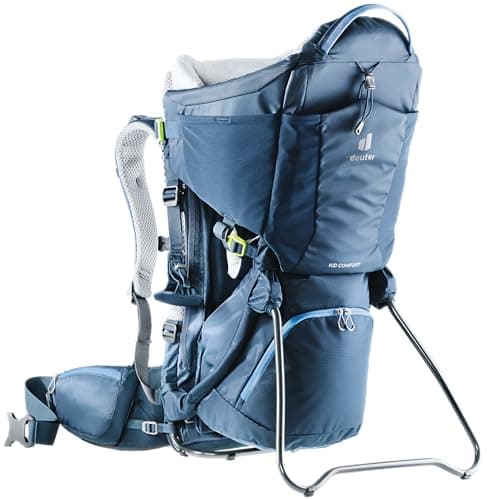 Deuter Kid Comfort7 lb 12 oz with a 53 lb total capacity and a Vari-Flex hip belt that moves with the wearer — the higher ceiling and the better suspension, at three pounds of penalty. | Full days of walking where the carrier never comes off | 8.7 | $309.95 · View on Amazon #ad we may earn a commission · price as of November 12, 2026 |
| 3 | 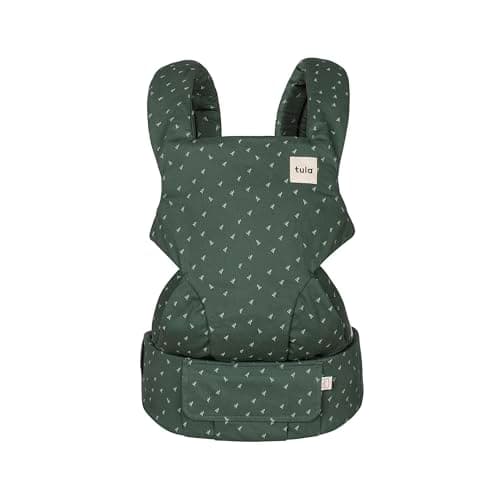 Baby Tula Explore1.7 lb, 7-45 lb capacity and three panel widths — a soft-structured carrier that weighs about a third of the Poco and packs into a diaper bag. | Short walks, city trips and anyone whose hiking is mostly pavement | 8.4 | $219.00 · View on Amazon #ad we may earn a commission · price as of November 12, 2026 |
The short answer
For travel, the Osprey Poco. It is 4.72 lb against the Deuter Kid Comfort’s 7 lb 12 oz, and it carries 22 L of gear against 14 L — so it is three pounds lighter and eight liters roomier. The Kid Comfort wins on one number that matters if your child is big: a 53 lb total capacity against the Poco’s 48.5 lb.
The published figures
| Spec | Osprey Poco | Deuter Kid Comfort | Tula Explore (no frame) |
|---|---|---|---|
| Pack weight | 4.72 lb | 7 lb 12 oz | 1.7 lb |
| Total capacity | 48.5 lb (child up to 40 lb) | 53 lb | 7-45 lb child |
| Gear storage | 22 L | 14 L | None |
| Suspension note | Not published as load-moving | Vari-Flex hip belt moves with the wearer | Soft panel, 3 width settings 5-15 in |
| Frame | Yes | Yes | No |
| Packs into hand luggage | No | No | Yes |
Poco figures from Treeline Review — Osprey Poco child carrier review, read 2026-09-27. Kid Comfort figures from Treeline Review — best baby and toddler hiking carriers, read 2026-09-27. Tula figures from Baby Tula — everything you need to know about Tula Explore, read 2026-09-27. The Tula column is here as a reality check, not as a like-for-like competitor.
Three pounds is not a detail on a trip
On a trail, a three-pound difference in pack weight is a comfort question and a reasonable person could decide it either way. On a trip it is a logistics question, and logistics questions have one answer.
A framed child carrier is not cabin baggage. Neither Osprey nor Deuter publishes a carry-on claim for these packs, and the shape — a rigid aluminum frame with a seat in it — is not going in an overhead bin. So it gets checked, and checked bags are weighed. Starting that calculation at 4.72 lb instead of 7 lb 12 oz gives you back three pounds of clothes, nappies or water for free.
The second half of the same argument is the gear storage. The Poco publishes 22 L, the Kid Comfort 14 L. 22 L is a usable daypack — it is the volume that lets the carrier replace a second bag rather than add to it. 14 L is a stuff-sack with pockets. If you are travelling as two adults and one child and trying to arrive with four pieces of luggage instead of six, the Poco removes one of them.
How to pick between them in one question
Is the walking the reason for the trip? If you are flying to a national park to hike for a week, buy the Kid Comfort: you are using the pack for six hours a day and the three pounds buys you a better belt and a higher ceiling. If you are flying somewhere and expect to hike some, buy the Poco: it is the pack that costs you least to bring and gives you the most storage when you do.
That is genuinely the whole decision. Both packs are framed, both take a child well past the point where a soft carrier is comfortable, and both are made by companies whose core business is load carriage. Neither is a bad purchase. They are optimised at opposite ends of the same trade.
The child-weight question, honestly
Both of these numbers are total capacities — pack plus child plus gear — not child weight limits, and the two get confused constantly. Osprey’s 48.5 lb is published alongside a child figure of up to 40 lb. Deuter’s 53 lb is published as a total. The practical reading:
- Poco: a 30 lb child leaves roughly 13-14 lb of gear headroom once you subtract the 4.72 lb pack. That is water, layers, lunch and a camera.
- Kid Comfort: a 30 lb child leaves roughly 15 lb once you subtract 7 lb 12 oz. Barely more, because the pack ate the difference.
- At 40 lb of child, the Kid Comfort’s higher ceiling starts to show: about 5 lb of headroom against the Poco’s 3.8 lb.
So the Kid Comfort’s capacity advantage is real but it is smaller than the raw numbers suggest, because the pack’s own weight consumes most of it until the child is large. Our carrier weight limits page has the same arithmetic across every carrier in the registry.
Positioning, on both
A framed carrier holds a child in a seated position with legs hanging. The International Hip Dysplasia Institute’s guidance on carriers is about supporting the thighs so the hips sit in a spread-squat rather than dangling (hipdysplasia.org, read 2026-09-27), which is why framed packs are for children who are already walking and not for infants. If your child is under about six months, neither of these is the right product — see hiking carriers for 6 month olds.
What we’d skip
Buying a framed pack for airports. People do this, and it is a mistake. A framed carrier is slower through security than a soft one, cannot be worn at the gate, and will not fit in an overhead bin. For the airport leg, a soft carrier or a travel stroller is the right tool — see baby carriers through airport security.
Comparing these two on price alone. They are in the same band and the band moves. The numbers that do not move are 4.72 lb, 7 lb 12 oz, 22 L and 14 L, and those are what should decide it.
Choose the Osprey Poco if
- You are flying to the walking rather than driving to it
- 4.72 lb against 7 lb 12 oz matters to your baggage allowance
- You want the carrier to replace a daypack - 22 L does that, 14 L does not
- Your child is comfortably under 40 lb
Choose the Deuter Kid Comfort if
- The hiking is the point of the trip and the pack is on for six hours a day
- Your child is at the top of the range and you want the 53 lb ceiling
- You value the Vari-Flex hip belt moving with your stride over three pounds saved
- The pack travels in a car, not on a baggage scale
The verdict
This site is about gear that has to work away from home, and on that test the Poco wins clearly: three pounds lighter, eight liters roomier, and the only one of the two we would willingly check. The Kid Comfort is the better hiking pack and the honest choice for anyone whose trips are measured in trail miles rather than boarding passes.
And if you read all of that and thought the real answer is that you do not hike enough to justify either: you are probably right, and the 1.7 lb Tula is in the picks above for exactly that reason. The full ranking is at best hiking baby carriers, and the single-model detail is in our Osprey Poco review.
Every pick in full
Osprey Poco Child Carrier
4.72 lb of pack weight with 22 L of gear storage and a 48.5 lb total capacity, which is the lightest framed carrier here by a clear three pounds.
Best for: Hiking that starts at an airport rather than a trailhead
| Pack weight | 4.72 lb |
|---|---|
| Total capacity | 48.5 lb (child up to 40 lb) |
| Gear storage | 22 L |
Specs from Treeline Review — Osprey Poco child carrier review, read 2026-09-27. Manufacturers revise specs without notice — check the listing before you buy.
Good at
- 4.72 lb pack weight — the figure that decides whether this gets on the plane at all
- 22 L of gear storage, 8 L more than the Kid Comfort, so the pack is also the day bag
- 48.5 lb total capacity, which covers a child up to 40 lb plus gear
- Light enough that one parent can carry it empty through a terminal without resenting it
Bad at
Its 48.5 lb total capacity is 4.5 lb lower than the Kid Comfort's 53 lb, so a heavy preschooler plus a full load of water and layers runs out of headroom sooner. It also has no equivalent of Deuter's Vari-Flex hip belt, so on long descents the load stays fixed relative to your hips rather than moving with them.
How it scores (out of 10)
Overall 9.2 — a research score against published specs, not a test result. See how we pick.
#ad we may earn a commission · price as of November 12, 2026
Deuter Kid Comfort
7 lb 12 oz with a 53 lb total capacity and a Vari-Flex hip belt that moves with the wearer — the higher ceiling and the better suspension, at three pounds of penalty.
Best for: Full days of walking where the carrier never comes off
| Pack weight | 7 lb 12 oz |
|---|---|
| Total capacity | 53 lb |
| Gear storage | 14 L |
| Suspension | Vari-Flex hip belt that moves with the wearer |
Specs from Treeline Review — best baby and toddler hiking carriers, read 2026-09-27. Manufacturers revise specs without notice — check the listing before you buy.
Good at
- 53 lb total capacity, the highest figure of the two, which buys headroom for an older child
- Vari-Flex hip belt that moves with the wearer rather than fighting your stride
- Built around all-day load carriage rather than around packed weight
Bad at
7 lb 12 oz is roughly 65% heavier than the Poco empty, and it carries 14 L of gear against the Poco's 22 L — so you pay three pounds and give up eight liters. On a trip where the pack is checked, weighed or hand-carried through a terminal, that is the wrong side of both trades.
How it scores (out of 10)
Overall 8.7 — a research score against published specs, not a test result. See how we pick.
#ad we may earn a commission · price as of November 12, 2026
Baby Tula Explore
1.7 lb, 7-45 lb capacity and three panel widths — a soft-structured carrier that weighs about a third of the Poco and packs into a diaper bag.
Best for: Short walks, city trips and anyone whose hiking is mostly pavement
| Fits | 7-45 lb, no infant insert |
|---|---|
| Carrier weight | 1.7 lb |
| Hip belt | 5 in tall, 27 in wide with roughly 30 in of extra webbing (about 57 in total) |
| Panel | 3 width settings from 5 to 15 in; 2 height settings |
| Wearer sizes | XS-4X |
Specs from Baby Tula — everything you need to know about Tula Explore, read 2026-09-27. Manufacturers revise specs without notice — check the listing before you buy.
Good at
- 1.7 lb, which is less than half the Poco's empty weight and under a quarter of the Kid Comfort's
- 7-45 lb range, so it covers the same upper child weight as a framed pack
- Packs flat into a carry-on instead of becoming a second checked item
- Hip belt measures 27 in with roughly 30 in of extra webbing, around 57 in total, so it fits a wide range of wearers
Bad at
There is no frame, no gear storage and no sunshade. A soft carrier puts the child's full weight on your shoulders and hips directly and gives you nowhere to put water, so it stops being the right tool somewhere around the two-hour mark on uneven ground.
How it scores (out of 10)
Overall 8.4 — a research score against published specs, not a test result. See how we pick.
#ad we may earn a commission · price as of November 12, 2026
Questions parents actually ask
Is the Osprey Poco or the Deuter Kid Comfort lighter?
The Osprey Poco. Its published pack weight is 4.72 lb against 7 lb 12 oz for the Deuter Kid Comfort - a gap of just over three pounds, which is roughly the weight of a full 1.5 L water bladder.
Which carries more weight, the Poco or the Kid Comfort?
The Kid Comfort. Its published total capacity is 53 lb against 48.5 lb for the Poco, whose figure breaks down as a child up to 40 lb plus gear. Both numbers are ceilings for pack plus child plus everything you load into it, not child weight alone.
Which has more storage?
The Poco, by a wide margin: 22 L of gear storage against 14 L on the Kid Comfort. That is the detail people miss when they compare the two on weight alone - the lighter pack is also the one that can replace your day bag.
Do I need a framed carrier for travel at all?
Usually not. A framed child carrier is for sustained walking on uneven ground. If your trip is airports, cities and paved paths, a soft-structured carrier at 1.7 lb covers the same child weight range and packs into hand luggage. Buy the frame when the walking is the point of the trip.
Can either one go in an overhead bin?
Neither is designed to, and neither brand publishes a cabin-baggage claim for them. Plan on checking a framed carrier or using a padded travel bag. This is the single strongest argument for the Poco's 4.72 lb: checked-bag allowances are measured in pounds.
Sources
- Treeline Review — Osprey Poco child carrier review — read 2026-09-27
- Treeline Review — best baby and toddler hiking carriers — read 2026-09-27
- Baby Tula — everything you need to know about Tula Explore — read 2026-09-27
- International Hip Dysplasia Institute — baby carriers and other equipment — read 2026-09-27
Every figure on this page traces to one of the sources above. Airline policies and manufacturer specs change without notice — check the primary source before you rely on a number.
Read next
- Osprey Poco Child Carrier Review
The Osprey Poco on published figures: 4.72 lb of pack, 48.5 lb total capacity, 22 L of storage — and the one place it cannot go.
- Best Hiking Baby Carriers
Framed child carriers compared on pack weight, total capacity and storage — and when a soft carrier is the better trail choice.
- Baby Carrier vs Hiking Backpack
Soft carrier or framed child carrier: the duration, terrain and luggage test that decides it, with published weights for both.
- Best Carriers for 3 Year Olds
The carriers with published range left at three years old - 45 lb soft-structured and framed packs to 48.5 and 53 lb total.
- Hiking Carriers for a 6 Month Old
What decides whether a six-month-old can go in a framed hiking pack, and the soft-carrier answer if they cannot yet.
More in Baby Carriers & Wraps, or start from the front page.