When Can a Baby Face Forward in a Carrier?
The answer is not a number of months, because no manufacturer publishes one. It is your carrier's own published range plus one physical prerequisite.
By Ryder M. · Published October 11, 2026 · Last reviewed
Disclosure: Wrap & Wander earns a commission on qualifying purchases made through links on this page, at no cost to you. It does not change which products we recommend or the order we rank them in — see how we pick and our full disclosure.
Quick picks
Ranked on the specs that decide it for a traveling parent — carried weight, packed size and fit. Tap a row to jump to the full write-up.
| # | Product | Best for | Score | Price |
|---|---|---|---|---|
| 1 | 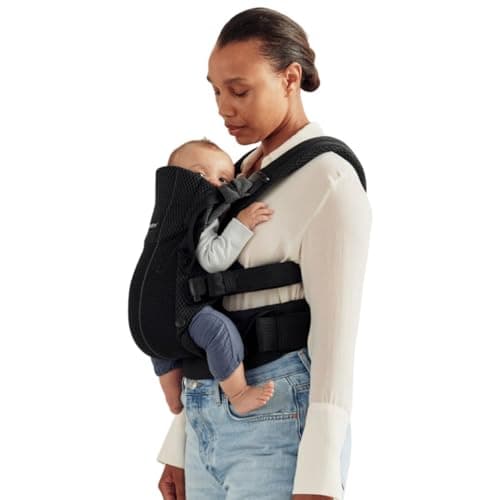 BabyBjörn Baby Carrier Harmony0-3 years, 7-40 lb and 21-39 in, with four positions including facing out and two height settings — one for newborns and one for older babies — and acknowledged as hip healthy by the International Hip Dysplasia Institute. | Someone who wants the facing-out window written down in numbers | 9.2 | $195.66 · View on Amazon #ad we may earn a commission · price as of November 12, 2026 |
| 2 | 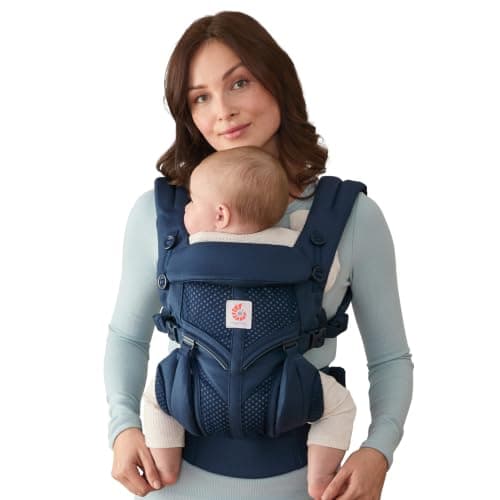 Ergobaby Omni Classic (formerly Omni 360)7-45 lb with no infant insert, four positions including front outward, a waistbelt that adjusts 26-52 in and shoulder straps that adjust 28-46 in. | Four positions across 7-45 lb with the fit numbers published | 9.0 | $179.00 · View on Amazon #ad we may earn a commission · price as of November 12, 2026 |
| 3 | 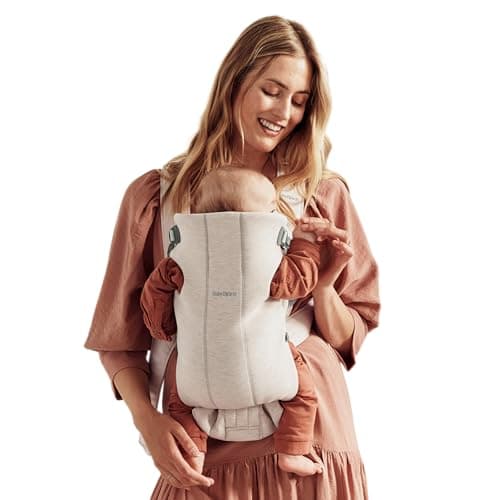 BabyBjörn Baby Carrier MiniRecommended 0-6 months and up to 15 lb, safety tested 7-24 lb and 21-30 in, front-facing in and front-facing out with no back carry, built to EN 13209-2:2015 and ASTM F2236. | The first six months, with facing out available inside that window | 8.4 | $79.99 · View on Amazon #ad we may earn a commission · price as of November 12, 2026 |
The short answer
There is no age. We read the published specifications for every carrier in our registry and not one of them states a month at which a baby may face outward. What they publish is a weight range, sometimes a height range, and a list of permitted positions — BabyBjörn publishes 0-3 years, 7-40 lb and 21-39 in for the Harmony; Ergobaby publishes 7-45 lb for the Omni 360. The instruction that governs your child is the manual in the box, and the physical prerequisite every manual describes is strong, independent head and neck control.
Why the internet gives you a number and the manufacturers do not
Search this question and you will be told four months, or five, or six. Those numbers are not coming from the companies that make the carriers. We checked: across the carriers in our registry that offer a forward-facing position, the published specification is a range and a position list, never an age.
That is not evasion. It is because an age is not a measurement of your child, and the prerequisite is a physical one. A baby who cannot hold their head up independently is not ready for a position that leaves the head unsupported, whether that happens at three months or at six. Weight and height you can check today; a milestone you have to observe.
What each carrier in our registry actually publishes
| Carrier | Published range | Positions | Age stated for facing out? |
|---|---|---|---|
| BabyBjörn Carrier Harmony | 0-3 years; 7-40 lb; 21-39 in | 4 — newborn, facing in, facing out, back carrying | No |
| Ergobaby Omni 360 | 7-45 lb (3.2-20 kg) | 4 — front inward, front outward, hip, back | No |
| Ergobaby Omni Deluxe | 7-45 lb (3.2-20 kg) | 4 — front inward, front outward, hip, back | No |
| LÍLLÉbaby Complete Airflow | 7-45 lb | 6 — front fetal, front infant, front outward, front toddler, hip, back | No |
| LÍLLÉbaby Complete All Seasons 6-in-1 | 7-45 lb | 6 — front fetal, front infant, front outward, front toddler, hip, back | No |
| BabyBjörn Carrier Mini | Recommended 0-6 months, up to 15 lb; safety tested 7-24 lb and 21-30 in | Front-facing in and front-facing out; no back carry | No |
BabyBjörn Harmony from BabyBjörn — Baby Carrier Harmony product page and carrier comparison chart, read 2026-10-07. Ergobaby Omni 360 from its specification page, read 2026-09-27; Omni Deluxe from Ergobaby Omni Deluxe Amazon listing, read 2026-10-16. LÍLLÉbaby Complete All Seasons from LÍLLÉbaby Complete All Seasons 6-in-1 Amazon listing, read 2026-10-16. BabyBjörn Mini read 2026-09-29. "Age stated for facing out?" records whether the page we read attaches a minimum age specifically to the outward position.
The one carrier that nearly answers it
The BabyBjörn Harmony comes closest. BabyBjörn publishes a period of use of 0-3 years, 7-40 lb and 21-39 in, four positions including facing out, and two height settings — one for newborns and one for older babies (babybjorn.com, read 2026-10-07).
Read that carefully, though, because it is a height setting rather than a facing-out gate. The useful thing it gives you is a height range at all: 21-39 in is a measurement you can take with a tape measure, and almost no other carrier publishes one. If you want the published envelope as tightly specified as it gets, that is the carrier.
The hip question, with the Institute’s actual wording
The International Hip Dysplasia Institute’s stated requirement of a carrier is that it support the thigh and allow the legs to spread, keeping the hip in a stable position, and it recommends carrying with the lower extremities in the M-position and similar spread-squat positions during the first six months, when the hips grow fastest (hipdysplasia.org, read 2026-09-27).
That is the lens to apply to any position, outward included: does the seat still support the thigh, or are the legs dangling? Some carriers answer it directly — Ergobaby publishes that its patented bucket seat and adjustable back panel hold that support as the baby grows, and that the Institute has determined every Ergobaby carrier hip-healthy (the Omni Deluxe listing, read 2026-10-16). That is the kind of sentence worth looking for on whatever you own.
The Institute’s own framing is careful and ours should be too: there is epidemiological evidence that hip-healthy carrying may decrease the risk of persistent hip dysplasia (hipdysplasia.org, read 2026-09-27). That is a population-level statement, not a claim about one carrier and one child. Our hip-healthy carriers page sets out exactly what the acknowledgment covers.
What to actually do
- Find the manual for your carrier, not a spec page. The position sequence and any prerequisites live there, and it is the document the manufacturer stands behind.
- Check the measurable things. Weight against the published range; height too, if your carrier publishes one. BabyBjörn’s 21-39 in for the Harmony is the example of a range you can verify in thirty seconds.
- Check head and neck control. This is the prerequisite, and it is observed rather than looked up. If you are unsure, that is a question for your pediatrician — not for a product page, ours included.
- Look at the seat, not the view. Thigh supported, legs able to spread. If the position leaves the legs hanging straight down, the Institute’s stated requirement is not being met in that position on that carrier.
Where this sits next to the other limits
Facing out is a position question. The ceiling is a different one, and it is answered separately in baby carrier weight limits by age, which lines every published range in the registry up against the stage it covers. If you are buying a carrier that has to span the whole arc rather than one stage, start at carriers for newborn to toddler, and if you are choosing between the two brands that publish the most here, read Ergobaby vs BabyBjörn.
Every pick in full
BabyBjörn Baby Carrier Harmony
0-3 years, 7-40 lb and 21-39 in, with four positions including facing out and two height settings — one for newborns and one for older babies — and acknowledged as hip healthy by the International Hip Dysplasia Institute.
Best for: Someone who wants the facing-out window written down in numbers
| Period of use | 0-3 years; 7-40 lb; 21-39 in |
|---|---|
| Wearer fit | BabyBjörn states it fits most wearers from XS to XXL |
| Positions | 4 - newborn, facing in, facing out, back carrying |
| Wearer support | pressure-relieving waist belt, padded shoulder straps, padded back support |
| Height settings | 2 - one for newborns, one for older babies |
| Fabrics | 3D Mesh (OEKO-TEX) or Brushed Woven (bluesign) |
| Hips | acknowledged as hip healthy by the International Hip Dysplasia Institute |
Specs from BabyBjörn — Baby Carrier Harmony product page and carrier comparison chart, read 2026-10-07. Manufacturers revise specs without notice — check the listing before you buy.
Good at
- Period of use published as 0-3 years, 7-40 lb and 21-39 in — a height range as well as a weight range
- Four positions: newborn, facing in, facing out, back carrying
- Two height settings, one for newborns and one for older babies
- BabyBjörn states it fits most wearers from XS to XXL
- Pressure-relieving waist belt, padded shoulder straps and padded back support
- Acknowledged as hip healthy by the International Hip Dysplasia Institute
Bad at
Even here BabyBjörn publishes positions and ranges rather than an age at which facing out becomes appropriate — the two height settings are described as newborn and older baby, not as a facing-out switch. At a $249.99 list price when we read it, it is also the most expensive way to get a published height range.
How it scores (out of 10)
Overall 9.2 — a research score against published specs, not a test result. See how we pick.
#ad we may earn a commission · price as of November 12, 2026
Ergobaby Omni Classic (formerly Omni 360)
7-45 lb with no infant insert, four positions including front outward, a waistbelt that adjusts 26-52 in and shoulder straps that adjust 28-46 in.
Best for: Four positions across 7-45 lb with the fit numbers published
| Fits | 7-45 lb (3.2-20 kg), newborn to toddler, no infant insert |
|---|---|
| Waistbelt | adjusts 26-52 in |
| Shoulder straps | adjust 28-46 in |
| Positions | 4 - front inward, front outward, hip, back |
Specs from Ergobaby Omni 360 specifications, read 2026-09-27. Manufacturers revise specs without notice — check the listing before you buy.
Good at
- 7-45 lb (3.2-20 kg), newborn to toddler, no infant insert
- Four positions including front outward
- Waistbelt adjusts 26-52 in; shoulder straps adjust 28-46 in
Bad at
Ergobaby's published specification lists the four positions and the 7-45 lb range but does not attach a separate minimum to the front-outward position on the page we read. That absence is the point of this guide: it means the manual in the box, not a spec sheet, is your instruction.
How it scores (out of 10)
Overall 9.0 — a research score against published specs, not a test result. See how we pick.
#ad we may earn a commission · price as of November 12, 2026
BabyBjörn Baby Carrier Mini
Recommended 0-6 months and up to 15 lb, safety tested 7-24 lb and 21-30 in, front-facing in and front-facing out with no back carry, built to EN 13209-2:2015 and ASTM F2236.
Best for: The first six months, with facing out available inside that window
| Recommended | 0-6 months, up to 15 lb |
|---|---|
| Safety tested | 7-24 lb, 21-30 in |
| Positions | front-facing in and front-facing out (no back carry) |
| Standards | EN 13209-2:2015 and ASTM F2236 |
| Hips | acknowledged as hip healthy by the International Hip Dysplasia Institute |
Specs from BabyBjörn Baby Carrier Mini product page, read 2026-09-27. Manufacturers revise specs without notice — check the listing before you buy.
Good at
- Recommended 0-6 months, up to 15 lb; safety tested 7-24 lb and 21-30 in
- Both front-facing in and front-facing out
- Built to EN 13209-2:2015 and ASTM F2236
- Acknowledged as hip healthy by the International Hip Dysplasia Institute
Bad at
A 15 lb recommendation and no back carry make this a carrier with a short life, and it is the clearest case of why an age answer is unsafe: a carrier that lists facing out and also recommends 0-6 months is not telling you a newborn should face out. Read the manual's own sequence.
How it scores (out of 10)
Overall 8.4 — a research score against published specs, not a test result. See how we pick.
#ad we may earn a commission · price as of November 12, 2026
Questions parents actually ask
At what age can a baby face forward in a carrier?
No manufacturer in our registry publishes an age for the facing-out position. They publish weight ranges, height ranges and a list of permitted positions — BabyBjörn publishes 0-3 years, 7-40 lb and 21-39 in for the Harmony, and Ergobaby publishes 7-45 lb for the Omni 360. The instruction that governs when your child may face out is in the manual that came with your specific carrier, and the physical prerequisite every manual describes is strong, independent head and neck control.
Why do brands not publish an age?
Because babies reach head and neck control at different times, and a date on a website would be wrong for some of them. Weight and height are measurable on the day you are standing there; an age is not a measurement of your child. Treat a published range as the envelope and the manual as the instruction.
Is facing forward bad for a baby's hips?
The International Hip Dysplasia Institute's stated requirement of a carrier is that it support the thigh and allow the legs to spread, keeping the hip in a stable position, and its guidance emphasizes the first six months when the hips grow fastest. That is the lens to apply to any position, including facing out. Ergobaby states that its patented bucket seat and adjustable back panel hold that support as the baby grows — the kind of claim worth looking for on the carrier you own.
Which carriers in your registry can face forward at all?
The Ergobaby Omni 360 and Omni Deluxe (four positions including front outward), the LÍLLÉbaby Complete Airflow and Complete All Seasons (six positions each, including front outward), the BabyBjörn Harmony (four including facing out) and the BabyBjörn Carrier Mini (front-facing in and out, with no back carry). The wraps and the ring sling in our registry do not publish a forward-facing position.
How long can a baby face forward at a time?
No manufacturer page we read publishes a time limit for the position, so we are not going to invent one. What is published is the range and the position list. The practical signal is the child: a baby who has had enough of facing out will tell you, and turning them back in is a strap adjustment on every carrier here that offers both.
Does facing forward change the weight limit?
Not on the pages we read. Ergobaby publishes one range, 7-45 lb, across all four positions for the Omni 360, and BabyBjörn publishes 7-40 lb and 21-39 in across the Harmony's four. If your carrier's manual states a different limit for a specific position, the manual wins — it is the document the manufacturer stands behind.
Sources
- BabyBjörn — Baby Carrier Harmony product page and carrier comparison chart — read 2026-10-07
- Ergobaby — Omni 360 FAQs and specifications — read 2026-09-27
- Ergobaby Omni Deluxe Amazon listing — read 2026-10-16
- BabyBjörn — Baby Carrier Mini — read 2026-09-29
- LÍLLÉbaby Complete All Seasons 6-in-1 Amazon listing — read 2026-10-16
- International Hip Dysplasia Institute — baby carriers and other equipment — read 2026-09-27
- International Hip Dysplasia Institute — benefits of the spread-squat position — read 2026-09-27
Every figure on this page traces to one of the sources above. Airline policies and manufacturer specs change without notice — check the primary source before you rely on a number.
Read next
- Baby Carrier Weight Limits by Age
Every published weight range by carrier type in one table, and why a tested limit is not a comfort limit.
- Hip-Healthy Baby Carriers
What the IHDI recommends, what its hip-healthy acknowledgment certifies, and which carriers carry it.
- Best Baby Carriers for Newborn to Toddler
Four carriers that publish a 7-45 lb range with no infant insert required — the spec that decides whether you buy one carrier or two.
- Best Baby Carriers for Travel
Eight carriers ranked on carrier weight, waistbelt range and packed bulk — the three specs that decide an airport day.
- Ergobaby vs BabyBjörn
Omni 360 versus Baby Carrier Mini on published weight range, belt adjustment and packed size — and which suits which trip.
More in Baby Carriers & Wraps, or start from the front page.