How to Choose a Baby Carrier
Not a list of features. Five published numbers, in the order they rule carriers out, and the one you have to measure yourself.
By Ryder M. · Published October 17, 2026 · Last reviewed

Disclosure: Wrap & Wander earns a commission on qualifying purchases made through links on this page, at no cost to you. It does not change which products we recommend or the order we rank them in — see how we pick and our full disclosure.
Quick picks
Ranked on the specs that decide it for a traveling parent — carried weight, packed size and fit. Tap a row to jump to the full write-up.
| # | Product | Best for | Score | Price |
|---|---|---|---|---|
| 1 | 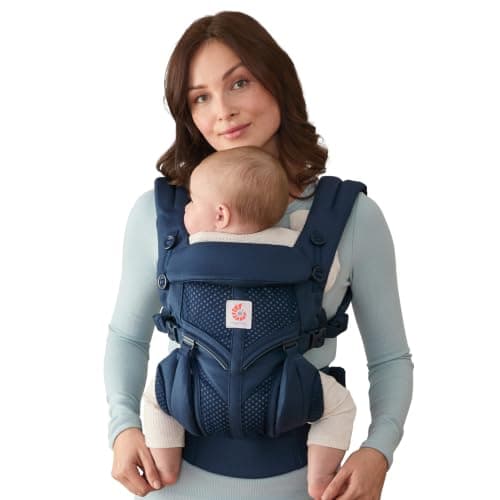 Ergobaby Omni Classic (formerly Omni 360)7-45 lb with no infant insert, a waistbelt adjusting 26-52 in, straps adjusting 28-46 in, and four positions — the widest set of published adjustment ranges in our registry. | Buying once and not thinking about it again | 9.0 | $179.00 · View on Amazon #ad we may earn a commission · price as of November 12, 2026 |
| 2 | 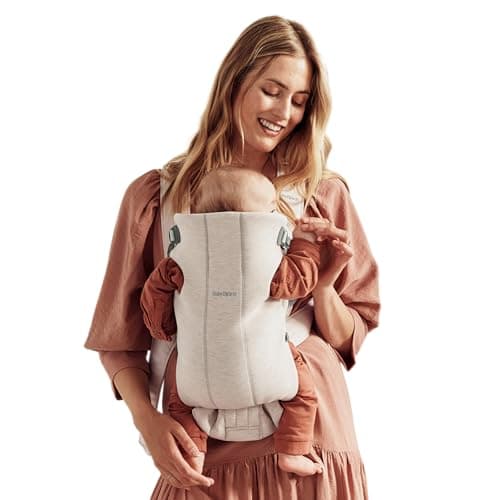 BabyBjörn Baby Carrier MiniRecommended 0-6 months up to 15 lb, safety tested 7-24 lb and 21-30 in, in two front positions, to EN 13209-2:2015 and ASTM F2236, and acknowledged as hip healthy by the International Hip Dysplasia Institute. | The first three months, and nothing beyond | 8.6 | $79.99 · View on Amazon #ad we may earn a commission · price as of November 12, 2026 |
| 3 | 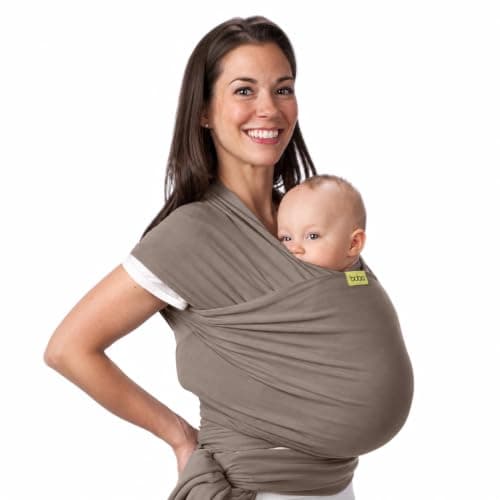 Boba Wrap7-35 lb in about 5.5 yards of four-way-stretch French terry cotton knit with spandex — one piece of fabric, one size, nothing to adjust wrong except the tying. | Finding out whether you like babywearing before spending more | 8.5 | |
| 4 | 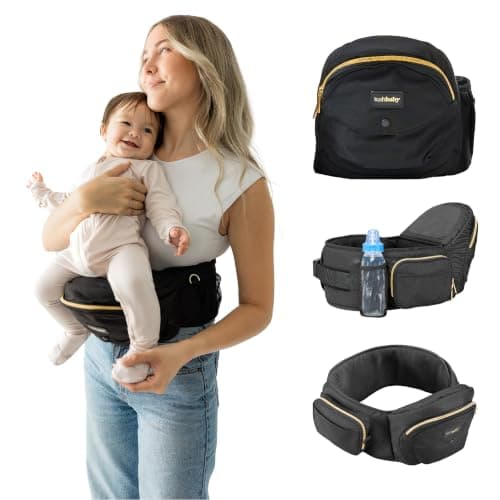 Tushbaby Hip Seat CarrierApproved 8-45 lb as a structured hip seat worn at the waist, with lumbar support built into the waistband and a memory foam-lined seat, on a buckle with two safeguards. | A toddler who will not stay in anything | 8.4 |
The short answer
Choose on five published figures, in this order: the weight range, the belt and strap measurements against your own body, the panel width against your baby, the positions you will actually use, and the fabric against your climate. Four of the five are printed by the brand. The fifth — your own measurement — takes a tape measure and thirty seconds, and it is the one almost nobody does.
1. Weight range: how many carriers are you buying?
This one decision sets the cost of the whole project. Carriers in our registry fall into three bands:
- Newborn-only, roughly 15-25 lb. The BabyBjörn Mini is recommended 0-6 months up to 15 lb; the Solly wrap publishes 8-25 lb. Simple, small, and you will buy again.
- To 35 lb. Every stretchy wrap and ring sling here. Covers roughly the first year and a half in practice, less in comfort.
- To 45 lb. The soft-structured carriers — Ergobaby Omni, Tula Explore, LÍLLÉbaby Complete Airflow — all published at 7-45 lb with no infant insert. One purchase, newborn to preschool.
If you want one carrier and no second decision, buy from the 45 lb band. The whole case for the newborn band is that it is smaller, cheaper and simpler for the months when you use a carrier most — which is a real argument, just not a one-purchase argument.
2. Belt and strap measurements: the spec about you
A carrier does not have a size, it has a range, and the range is published in inches. Measure where the waistbelt will sit — at or just above your hip bones, over the clothes you actually wear — and check that number against the brand’s figure.
| Carrier | Waistbelt / hip belt | Shoulder straps | Published wearer sizing |
|---|---|---|---|
| Ergobaby Omni Classic | 26-52 in | 28-46 in | Not published as sizes |
| Tula Explore | 27 in wide plus roughly 30 in webbing (about 57 in total) | Not published | XS-4X |
| LÍLLÉbaby Complete Airflow | Extendable padded belt; petite to tall | Adjust petite to tall | Not published as sizes |
| BabyBjörn Mini | Not published as a range | Not published | Not published |
| Boba Wrap | One size - 5.5 yards of fabric | n/a | One size |
| WildBird Ring Sling | Standard 74 in; Long 90 in | n/a | Long named for plus-size or 6 ft+ |
| Tushbaby | Not published as a range | None - hip seat | Not published |
Each figure is the brand's own published number as carried in our registry: Ergobaby read 2026-09-27, Tula read 2026-09-27, LÍLLÉbaby read 2026-09-27, BabyBjörn read 2026-09-29, Boba read 2026-09-29, WildBird read 2026-09-27, Tushbaby read 2026-09-29. "Not published" means exactly that - we are not estimating.
3. Panel width: the spec about your baby
The seat of the carrier has to support the baby’s thighs from knee to knee, so the hips sit in a spread-squat with the knees higher than the bottom rather than the legs hanging from the crotch. That is the International Hip Dysplasia Institute’s guidance (hipdysplasia.org, read 2026-09-27).
A carrier that adjusts its panel can do that across the whole weight range. The Tula Explore publishes three widths from 5 to 15 in and two heights. A carrier with a fixed panel is sized for one stage of baby, which is fine if you are buying for that stage.
The practical check: with the baby in, their knees should be level with or above their bottom, and the fabric should run thigh to thigh, not just under the crotch. Our hip-healthy carriers page goes through what the Institute does and does not say.
4. Positions: be honest about what you will use
Carriers advertise two to six positions. The ones that matter in practice:
- Front inward. Everyone uses this. Any carrier does it.
- Back carry. This is the one that matters once the child is over about 20 lb, because a heavy child on your front loads your lower back and hides your feet. If you plan to carry a toddler, buy a carrier with a back carry.
- Front outward. Popular, genuinely useful at the curious stage, and the position with the shortest window.
- Hip carry. Rarely used by most people; excellent for the specific toddler who wants down constantly, which is also the Tushbaby’s whole premise.
Six positions is not six times better than two. The BabyBjörn Mini in the picks above does two and is the easiest carrier in the registry to put on correctly, which for a first-time user at 3am is worth more than optionality.
5. Fabric: the spec your destination chooses
Babywearing puts two torsos in contact and adds a layer over both. In a hot climate that is the whole experience, and the fabric decides whether you wear the thing or carry it.
Mesh panels (the LÍLLÉbaby Complete Airflow’s 3D mesh, the Omni’s Cool Air Mesh) are the structured answer. Linen (the WildBird sling) and TENCEL modal (the Solly wrap) are the unstructured ones. French terry cotton knit (the Boba) is the warm one — fine in a temperate climate, hard work in humidity. The full ranking is at best baby carriers for hot weather.
The three mistakes worth naming
Buying for the baby you have today. A newborn-only carrier is a reasonable deliberate choice and a bad accidental one. Check the ceiling before you buy, not after.
Not measuring yourself. Published belt ranges exist. Most returns of structured carriers are fit problems that a tape measure would have caught, and our plus-size and petite roundups exist because the ends of the range are where brands publish least.
Treating “up to 45 lb” as a comfort promise. It is a structural limit. Every carrier gets uncomfortable well before its ceiling, and a stretchy wrap gets there soonest. The published limits for every carrier in the registry are collected at carrier weight limits by age.
Where to go next
If you want the decision made for you, our travel carrier roundup is the one page to read, and best carriers for beginners ranks the same field by how many steps stand between the box and a correctly positioned baby. If you have narrowed to a format rather than a model, wrap vs carrier is the next question.
Every pick in full
Ergobaby Omni Classic (formerly Omni 360)
7-45 lb with no infant insert, a waistbelt adjusting 26-52 in, straps adjusting 28-46 in, and four positions — the widest set of published adjustment ranges in our registry.
Best for: Buying once and not thinking about it again
| Fits | 7-45 lb (3.2-20 kg), newborn to toddler, no infant insert |
|---|---|
| Waistbelt | adjusts 26-52 in |
| Shoulder straps | adjust 28-46 in |
| Positions | 4 - front inward, front outward, hip, back |
Specs from Ergobaby Omni 360 specifications, read 2026-09-27. Manufacturers revise specs without notice — check the listing before you buy.
Good at
- 7-45 lb covers newborn to preschool without an insert
- Waistbelt 26-52 in - a 26 in span, which is the most generous published range here
- Straps 28-46 in, so a tall wearer and a petite one can genuinely share it
- Four positions: front inward, front outward, hip and back
Bad at
Four positions and the widest adjustment range mean the most to set up and the most to get wrong. If you want something you can put on correctly without reading anything, this is not the easiest carrier in the registry.
How it scores (out of 10)
Overall 9.0 — a research score against published specs, not a test result. See how we pick.
#ad we may earn a commission · price as of November 12, 2026
BabyBjörn Baby Carrier Mini
Recommended 0-6 months up to 15 lb, safety tested 7-24 lb and 21-30 in, in two front positions, to EN 13209-2:2015 and ASTM F2236, and acknowledged as hip healthy by the International Hip Dysplasia Institute.
Best for: The first three months, and nothing beyond
| Recommended | 0-6 months, up to 15 lb |
|---|---|
| Safety tested | 7-24 lb, 21-30 in |
| Positions | front-facing in and front-facing out (no back carry) |
| Standards | EN 13209-2:2015 and ASTM F2236 |
| Hips | acknowledged as hip healthy by the International Hip Dysplasia Institute |
Specs from BabyBjörn Baby Carrier Mini product page, read 2026-09-27. Manufacturers revise specs without notice — check the listing before you buy.
Good at
- Two positions only, so there is almost nothing to set wrong
- Published to EN 13209-2:2015 and ASTM F2236, with an IHDI hip-healthy acknowledgement
- Safety tested 7-24 lb and 21-30 in - unusually specific published figures
- Small enough that it lives in a diaper bag rather than taking a slot in a suitcase
Bad at
BabyBjörn recommends it to 6 months or 15 lb, and there is no back carry. It is deliberately a newborn product - buy it knowing you will buy a second carrier, which is a real cost if you only wanted one.
How it scores (out of 10)
Overall 8.6 — a research score against published specs, not a test result. See how we pick.
#ad we may earn a commission · price as of November 12, 2026
Boba Wrap
7-35 lb in about 5.5 yards of four-way-stretch French terry cotton knit with spandex — one piece of fabric, one size, nothing to adjust wrong except the tying.
Best for: Finding out whether you like babywearing before spending more
| Fits | 7-35 lb |
|---|---|
| Length | about 5.5 yards (roughly 16.5 ft) of fabric |
| Fabric | 95% French terry cotton knit with spandex, four-way stretch |
Specs from Boba Wrap product page, read 2026-09-27. Manufacturers revise specs without notice — check the listing before you buy.
Good at
- 7-35 lb published range, starting lower than most structured carriers
- One size fits any wearer, so two parents share it with no sizing decision
- Four-way stretch forgives imprecise tension, which is what makes wraps learnable
- Nothing to break, nothing to buckle, nothing to leave behind
Bad at
About 5.5 yards - roughly 16.5 ft - of cotton knit to manage, which is awkward in an airport and warm in a hot climate. And a stretchy wrap sags under a heavy child long before its 35 lb ceiling, so it is a first-half-of-the-first-year tool.
How it scores (out of 10)
Overall 8.5 — a research score against published specs, not a test result. See how we pick.
Tushbaby Hip Seat Carrier
Approved 8-45 lb as a structured hip seat worn at the waist, with lumbar support built into the waistband and a memory foam-lined seat, on a buckle with two safeguards.
Best for: A toddler who will not stay in anything
| Approved for | 8-45 lb |
|---|---|
| Type | structured hip seat worn at the waist; child sits on the hip |
| Support | lumbar support built into the waistband; memory foam-lined seat |
| Load | ergonomic weight distribution - the brand states it shifts the child’s weight to ease pressure on your back, shoulders and arms |
| Buckle | buckle with two safeguards |
Specs from Tushbaby - Hip Seat Carrier product page, read 2026-09-29. Manufacturers revise specs without notice — check the listing before you buy.
Good at
- 8-45 lb approved range, which is the full span of a structured carrier
- Lumbar support built into the waistband rather than added as a pad
- On and off faster than any buckled carrier - it is a belt
- Buckle published with two safeguards
Bad at
There are no shoulder straps, so the child is not secured to you and one arm is always involved. That rules it out for anything where you need both hands or where a fall matters - airports, stairs, trails - and it is not a newborn product.
How it scores (out of 10)
Overall 8.4 — a research score against published specs, not a test result. See how we pick.
Questions parents actually ask
How do I choose a baby carrier?
Work through five published figures in order: the weight range (does it cover your baby now and in six months), the belt and strap measurements against your own body, the panel width against your baby's knee-to-knee, the carry positions you will actually use, and the fabric against your climate. Four of the five are printed by the brand; the fifth, your own measurements, you take with a tape measure.
What size baby carrier do I need?
Measure where the waistbelt will sit - at or just above your hip bones - and compare that number against the brand's published belt range. The Ergobaby Omni publishes 26-52 in, the Tula Explore about 57 in of total webbing with wearer sizing XS-4X. If a brand publishes no number, that is information too.
Do I need a newborn insert?
Not with most current carriers. Every soft-structured carrier in our registry that starts at 7 lb states that no infant insert is required. If a carrier needs one, factor in the cost and the bulk - an insert is another thing to pack and another thing to get wrong.
Is a wrap or a structured carrier better for a first carrier?
A wrap is cheaper and fits any body, but you have to learn to tie it. A structured carrier costs more and has to fit your measurements, but it goes on the same way every time. If you are buying one carrier for the whole first year, buy the structured one with a 7-45 lb range.
How do I know the carrier fits my baby's hips correctly?
The seat should support the thighs from knee to knee so the hips sit in a spread-squat with the knees higher than the bottom, rather than the legs hanging from the crotch. That is the International Hip Dysplasia Institute's guidance, and on an adjustable carrier it is set by the panel width - the Tula Explore publishes three settings from 5 to 15 in for exactly this reason.
Which carrier is best for travel specifically?
One that packs flat, covers the full weight range so you only bring one, and fits both adults so you can hand it over. That usually means a soft-structured carrier at 7-45 lb rather than a wrap or a framed pack. Our travel carrier roundup ranks them.
Sources
- Ergobaby — Omni 360 FAQs and specifications — read 2026-09-27
- BabyBjörn — Baby Carrier Mini — read 2026-09-29
- Boba — Boba Wrap — read 2026-09-29
- Tushbaby — Hip Seat Carrier product page — read 2026-09-29
- Baby Tula — everything you need to know about Tula Explore — read 2026-09-27
- International Hip Dysplasia Institute — baby carriers and other equipment — read 2026-09-27
- International Hip Dysplasia Institute — benefits of the spread-squat position — read 2026-09-27
Every figure on this page traces to one of the sources above. Airline policies and manufacturer specs change without notice — check the primary source before you rely on a number.
Read next
- Best Baby Carrier for Beginners
Which first carrier is easiest to get on correctly — pre-wrapped sling, buckled carrier or stretchy wrap — ranked on steps to wear.
- Baby Wrap vs Carrier
Fabric or buckles: packed size and shareability against speed and hip-borne load, with the crossover point named.
- Best Baby Carriers for Travel
Eight carriers ranked on carrier weight, waistbelt range and packed bulk — the three specs that decide an airport day.
- Baby Carrier Weight Limits by Age
Every published weight range by carrier type in one table, and why a tested limit is not a comfort limit.
- Hip-Healthy Baby Carriers
What the IHDI recommends, what its hip-healthy acknowledgment certifies, and which carriers carry it.
More in Baby Carriers & Wraps, or start from the front page.