Best FAA-Approved Car Seats
The sticker on the side is the only thing a flight attendant will read. Here is exactly what each of these publishes, and what the lightest option weighs.
By Ryder M. · Published November 10, 2026 · Last reviewed
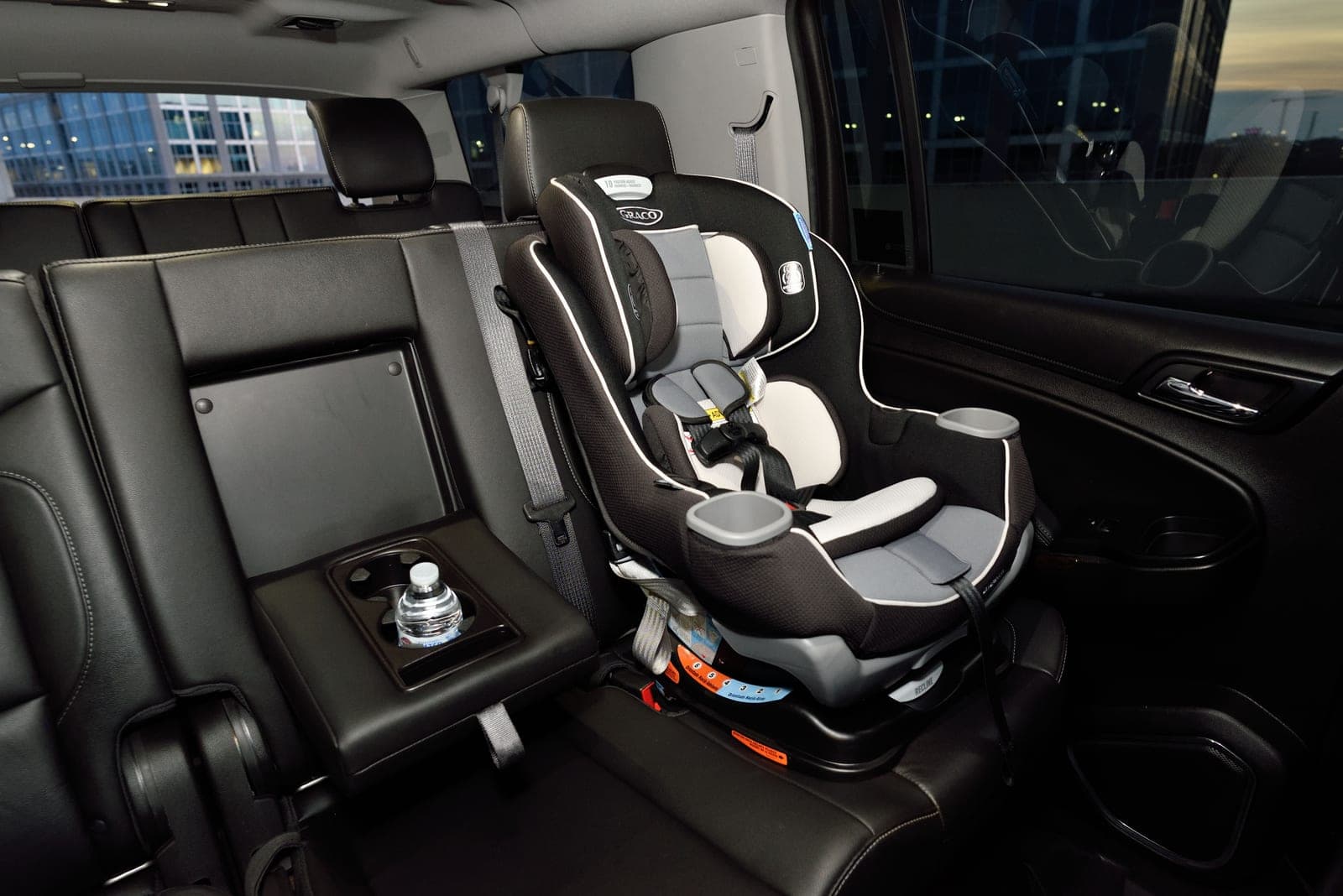
Disclosure: Wrap & Wander earns a commission on qualifying purchases made through links on this page, at no cost to you. It does not change which products we recommend or the order we rank them in — see how we pick and our full disclosure.
Quick picks
Ranked on the specs that decide it for a traveling parent — carried weight, packed size and fit. Tap a row to jump to the full write-up.
| # | Product | Best for | Score | Price |
|---|---|---|---|---|
| 1 | 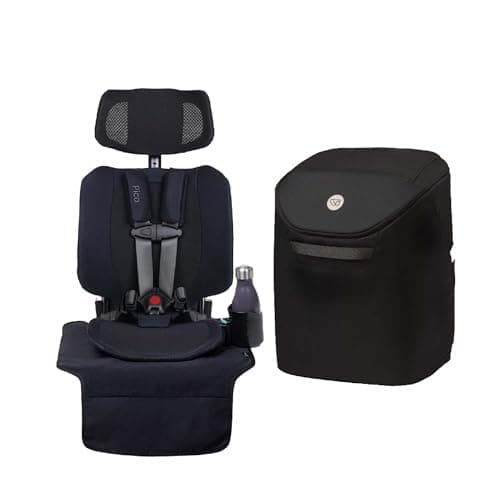 WAYB Pico Travel Car Seat8 lb, published as FAA approved, folding to 11.6 x 14.5 x 18.9 in — which fits an overhead bin — with a backpack-style carry bag, forward-facing for 22-50 lb and 30-45 in. | A 2-to-5-year-old, carried as a backpack through the airport and used in the seat | 9.1 | |
| 2 | 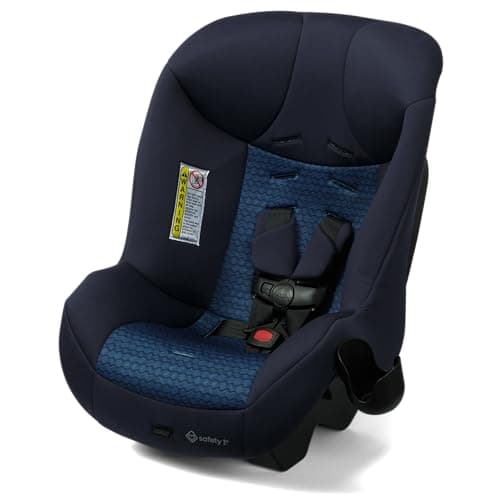 Safety 1st Smooth Ride Convertible Car Seat8.8 lb and 18.88 in wide, published as certified for use on an aircraft, rear-facing 5-40 lb and 19-40 in, forward-facing 30-50 lb and 34.4-44 in, with a 5-point front-adjust harness and LATCH. | The cheapest real car seat here that is certified for aircraft use and still works rear-facing | 8.8 | $94.99 · View on Amazon #ad we may earn a commission · price as of November 12, 2026 |
| 3 | 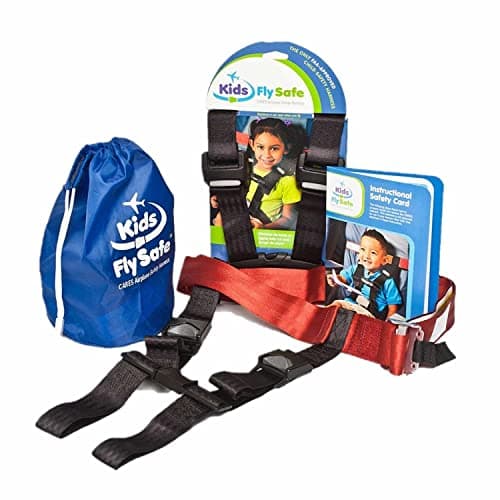 AmSafe CARES Child Aviation Restraint System11 oz — not pounds — published as the only FAA-approved harness-type child aviation restraint, for children 22-44 lb and 40 in or less who can sit upright unaided, installing in under a minute per the maker. | A 22-44 lb child on a flight, when nothing has to be carried in a car at the other end | 8.6 | |
| 4 | 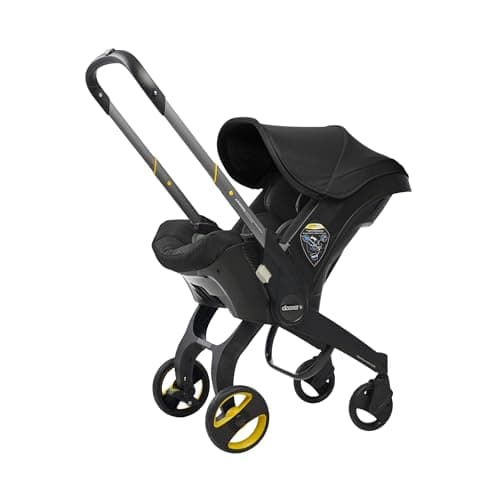 Doona Car Seat & StrollerA 17.2 lb infant car seat with integrated wheels, 4-35 lb and up to 32 in, published as FAA approved and compliant with FMVSS 213, ASTM F833 and ASTM F2050, folding to 17.4 x 26 x 22.4 in. | A baby under 35 lb, where the seat has to become the stroller the moment you land | 8.7 | $550.00 · View on Amazon #ad we may earn a commission · price as of November 12, 2026 |
The short answer
Buy the WAYB Pico if the child is between 22 and 50 lb: 8 lb, published as FAA approved, and it folds to 11.6 x 14.5 x 18.9 in with a backpack carry bag, which means it goes in an overhead bin instead of being gate-checked. The budget pick is the Safety 1st Smooth Ride — 8.8 lb, published as certified for use on an aircraft, and the only pick here that works rear-facing from 5 lb, for a small fraction of the price. If nothing needs to be carried in a car at your destination, the CARES harness weighs 11 oz. Live prices with their read date sit on every row.
Three different forms of words for the same sticker
“FAA approved” is how everybody searches for this, and it is not how every maker writes it. Of the restraints in our registry that publish aircraft certification, one says “FAA approved”, one says “certified for use on an aircraft”, one says “certified for use in commercial aircraft”, and one says it is the only FAA-approved harness-type child aviation restraint system.
In practice they point at the same thing: the red label on the side of a US seat stating it is certified for motor vehicles and aircraft. What matters to a flight attendant is that label, not the listing. We quote each maker’s exact wording in the table below rather than flattening them all to “FAA approved”, because upgrading a weaker claim to a stronger one is how misinformation gets into a category where the stakes are real.
What each one publishes
| Restraint | Published wording | Weight | Width | Child range |
|---|---|---|---|---|
| WAYB Pico | FAA approved | 8 lb | Not published | 22-50 lb, 30-45 in, forward-facing only |
| Safety 1st Smooth Ride | Certified for use on an aircraft | 8.8 lb | 18.88 in | RF 5-40 lb; FF 30-50 lb |
| AmSafe CARES harness | Only FAA-approved harness-type CARS | 11 oz | n/a — harness | 22-44 lb, 40 in or less |
| Doona | FAA approved; FMVSS 213, ASTM F833, ASTM F2050 | 17.2 lb | 17.4 in | 4-35 lb, to 32 in |
| Cosco Scenera Extend | Certified for use in commercial aircraft | About 9 lb | 19 in | RF 5-40 lb; FF 30-50 lb |
Quoted from each maker's product page or listing in Sources. The Cosco Scenera Extend row is included because its published aircraft wording is relevant, but it carries NO buy row on this site: it has no live Amazon listing, so it is not a pick on this page. Live price and its 'as of' date sit on every other row.
How we ranked them
Published aircraft wording first, scored on specificity — a named standard beats an adjective. Then carried weight, because the restraint has to get to the aircraft in your hands. Then whether it fits an aircraft seat, the age range it covers, and value. The lightest option on the page is not the top pick, because a harness that cannot be used in a car only solves half of most trips.
What we’d skip
Booster seats and backless boosters. They are not approved for aircraft use, because an aircraft lap belt has no shoulder portion to position. If your child is at booster age, the CARES harness is the restraint that applies.
Any seat without the red aircraft label. A listing that says “travel car seat” without publishing aircraft certification is a car seat that is small, not a car seat you can use in the air. Check the side of the shell before you check in.
Every pick in full
WAYB Pico Travel Car Seat
8 lb, published as FAA approved, folding to 11.6 x 14.5 x 18.9 in — which fits an overhead bin — with a backpack-style carry bag, forward-facing for 22-50 lb and 30-45 in.
Best for: A 2-to-5-year-old, carried as a backpack through the airport and used in the seat
| Weight | 8 lb |
|---|---|
| Folded | 11.6 x 14.5 x 18.9 in — fits an overhead bin |
| In use | 15.2 x 14.5 x 22.8 in (lowest) to 15.2 x 14.5 x 27.8 in (highest) |
| Forward-facing only | 22-50 lb, 30-45 in |
| Air travel | FAA approved; backpack-style carry bag |
Specs from Car Seats For The Littles — WAYB Pico review, read 2026-09-27. Manufacturers revise specs without notice — check the listing before you buy.
Good at
- 8 lb, the lightest published weight of any car seat in our registry
- Published as FAA approved, in those words
- Folds to 11.6 x 14.5 x 18.9 in and fits an overhead bin, which no other car seat here claims
- A backpack-style carry bag, so your hands stay free for the child it is for
- Forward-facing 22-50 lb covers the exact age range that is too big for a lap and too small for a seatbelt
Bad at
Forward-facing only, with a 22 lb floor — it cannot be used rear-facing at all, so it is no use for an infant, and most guidance keeps children rear-facing well past 22 lb. It is also by far the most expensive restraint on this page, several times the budget pick, and it is a travel seat rather than an everyday one.
How it scores (out of 10)
Overall 9.1 — a research score against published specs, not a test result. See how we pick.
Safety 1st Smooth Ride Convertible Car Seat
8.8 lb and 18.88 in wide, published as certified for use on an aircraft, rear-facing 5-40 lb and 19-40 in, forward-facing 30-50 lb and 34.4-44 in, with a 5-point front-adjust harness and LATCH.
Best for: The cheapest real car seat here that is certified for aircraft use and still works rear-facing
| Weight | 8.8 lb |
|---|---|
| Width | 18.88 in |
| Rear-facing | 5-40 lb, 19-40 in |
| Forward-facing | 30-50 lb, 34.4-44 in |
| Fits | three across the back seat of most vehicles |
| Harness | 5-point, front adjust; 5 harness heights, 3 buckle locations |
| Air travel | certified for use on an aircraft |
| Install | LATCH compatible |
Specs from Safety 1st Smooth Ride Convertible Car Seat Amazon listing, read 2026-10-16. Manufacturers revise specs without notice — check the listing before you buy.
Good at
- The cheapest car seat in our registry, by a wide margin, that publishes aircraft certification
- 8.8 lb, within a pound of the lightest seat here, at a fraction of its price
- Rear-facing from 5 lb, so it covers newborns — which the top pick cannot do at all
- 18.88 in wide and published to fit three across the back seat of most vehicles, which is also what makes it fit an aircraft seat
- 5 harness heights and 3 buckle locations, so it grows with the child rather than being outgrown
Bad at
Its published wording is 'certified for use on an aircraft' rather than 'FAA approved' — the same practical meaning, a different form of words, and we are not going to upgrade one to the other. It does not fold, there is no travel bag, and at 8.8 lb with no carry solution you are hugging it through the terminal.
How it scores (out of 10)
Overall 8.8 — a research score against published specs, not a test result. See how we pick.
#ad we may earn a commission · price as of November 12, 2026
AmSafe CARES Child Aviation Restraint System
11 oz — not pounds — published as the only FAA-approved harness-type child aviation restraint, for children 22-44 lb and 40 in or less who can sit upright unaided, installing in under a minute per the maker.
Best for: A 22-44 lb child on a flight, when nothing has to be carried in a car at the other end
| For children | 22-44 lb, 40 in or less, able to sit upright unaided |
|---|---|
| Weight | 11 oz |
| Approval | the only FAA-approved harness-type child aviation restraint |
| Install | the brand states under 60 seconds; packs into a carry-on |
Specs from AmSafe CARES product page, read 2026-09-27. Manufacturers revise specs without notice — check the listing before you buy.
Good at
- 11 oz, which is roughly a hundredth of a car seat and packs into a carry-on pocket
- Published as the ONLY FAA-approved harness-type child aviation restraint system, which is a specific and verifiable claim
- Installs in under 60 seconds per the maker, around the seat back and the lap belt
- Nothing to gate-check, nothing to carry, nothing to damage
Bad at
It is not a car seat and cannot be used in a car, so unless a seat is waiting at your destination you still have to travel with one. Its 22-44 lb window is narrower than any seat here, and the child must be able to sit upright unaided — so it does nothing for the infant and toddler stages when flying is hardest.
How it scores (out of 10)
Overall 8.6 — a research score against published specs, not a test result. See how we pick.
Doona Car Seat & Stroller
A 17.2 lb infant car seat with integrated wheels, 4-35 lb and up to 32 in, published as FAA approved and compliant with FMVSS 213, ASTM F833 and ASTM F2050, folding to 17.4 x 26 x 22.4 in.
Best for: A baby under 35 lb, where the seat has to become the stroller the moment you land
| Weight | 17.2 lb |
|---|---|
| Capacity | 4-35 lb, up to 32 in |
| Folded | 17.4 x 26 x 22.4 in |
| Open | 17.4 x 32.3 x 39 in |
| Standards | FAA approved; FMVSS 213, ASTM F833, ASTM F2050 |
Specs from Doona USA product page, read 2026-09-27. Manufacturers revise specs without notice — check the listing before you buy.
Good at
- Published as FAA approved and to three named standards — FMVSS 213, ASTM F833 and ASTM F2050 — which is the most specific compliance list on this page
- It is the seat AND the stroller, so there is nothing to gate-check and nothing to carry separately
- 4 lb at the bottom of its range, which covers a newborn from the hospital
- Wheels fold away in one motion, so it goes down an aisle as a car seat
Bad at
17.2 lb, more than double the lightest seat here, and a 32 in height ceiling that most children reach around two — this is an infant product with a short life. It is also the second most expensive restraint on this page, and our own page on whether the Doona is worth it is not uncritical about that.
How it scores (out of 10)
Overall 8.7 — a research score against published specs, not a test result. See how we pick.
#ad we may earn a commission · price as of November 12, 2026
Questions parents actually ask
How do I know if a car seat is FAA approved?
By the label on the side of the seat, which is the only thing a flight attendant will look at. US seats certified for aircraft carry a red sticker stating that the seat is certified for use in motor vehicles and aircraft. The makers' published wording varies — one seat on this page says 'FAA approved', another says 'certified for use on an aircraft' and a third says 'certified for use in commercial aircraft' — and we quote each exactly rather than normalizing them. The FAA's own guidance on child safety seats is linked in Sources.
What is the lightest FAA-approved car seat?
On published weights in our registry, the WAYB Pico at 8 lb is the lightest car seat, and the Safety 1st Smooth Ride at 8.8 lb is within a pound of it at a fraction of the price. If you count restraints rather than car seats, the CARES harness at 11 oz beats both by an order of magnitude — but it cannot be used in a car at the other end, which is the whole trade.
Will a car seat fit in an airplane seat?
Width is the thing to check, and most US airlines' economy seats are in the 16-17 in range between armrests. The seats here publish 18.88 in and 19 in overall widths, which usually still fit because the shell narrows at the base, but it is the measurement to compare against your airline's published seat width. Frontier is the one airline on this site that publishes minimum seat widths outright — 17.4 in on the A319 and A320 and 16.5 in on the A321 — and our Frontier page works through which seats that rules out.
Do I have to buy a seat for my baby to use a car seat on a plane?
Yes — a car seat needs its own purchased seat, which is the real cost of flying with one. A lap infant pays no fare on most US carriers but cannot be in a restraint. Our page on whether babies need a ticket to fly works through the fares, and our airline pages cover each carrier's lap-infant and car-seat policies individually.
Is a CARES harness as safe as a car seat?
It is the only harness-type child aviation restraint the FAA has approved, which is a specific regulatory fact rather than a marketing claim, and it is approved for exactly the window its maker publishes: 22-44 lb, 40 in or less, able to sit upright unaided. Outside that window it is not an option at all. Our dedicated CARES-versus-car-seat comparison goes through the trade in detail, including the fact that it does nothing for you in the rental car.
Sources
- Car Seats For The Littles — WAYB Pico review — read 2026-09-27
- Safety 1st Smooth Ride Convertible Car Seat Amazon listing — read 2026-10-16
- AmSafe — CARES Child Aviation Restraint System — read 2026-09-27
- Doona USA — car seat and stroller — read 2026-09-27
- FAA — does the FAA require children on commercial flights to be in child restraint systems? — read 2026-09-27
- FAA — which child restraint systems does the FAA approve for use on aircraft? — read 2026-09-27
- Cosco Kids — Scenera Extend — read 2026-09-27
- Frontier Airlines — can I bring a car seat onboard (FAA-approved label required, separate paid seat required, window seat only, not in exit or bulkhead rows, minimum seat width 17.4 in on A319/A320 and 16.5 in on A321) — read 2026-11-04
Every figure on this page traces to one of the sources above. Airline policies and manufacturer specs change without notice — check the primary source before you rely on a number.
Read next
- Best Travel Car Seats
Five travel car seats compared on published weight, width, harness range and FAA approval.
- Do You Need a Car Seat on a Plane?
Not required, strongly recommended: what the FAA publishes, what counts as approved, and what each airline states.
- CARES Harness vs Car Seat
The CARES harness against a travel car seat on published weight, age limits and what each one is useless for.
- Best Travel Car Seats for 2 Year Olds
The travel seats that still rear-face at two, ranked on published limits, weight and aircraft certification.
- Lightest Travel Strollers
Six travel strollers ranked on published weight, with folded dimensions beside them — because a 3.7 lb spread across the whole category matters far less than the fold, and the lightest model here is the only one with no published fold at all.
More in Travel Strollers & Car Seats, or start from the front page.